
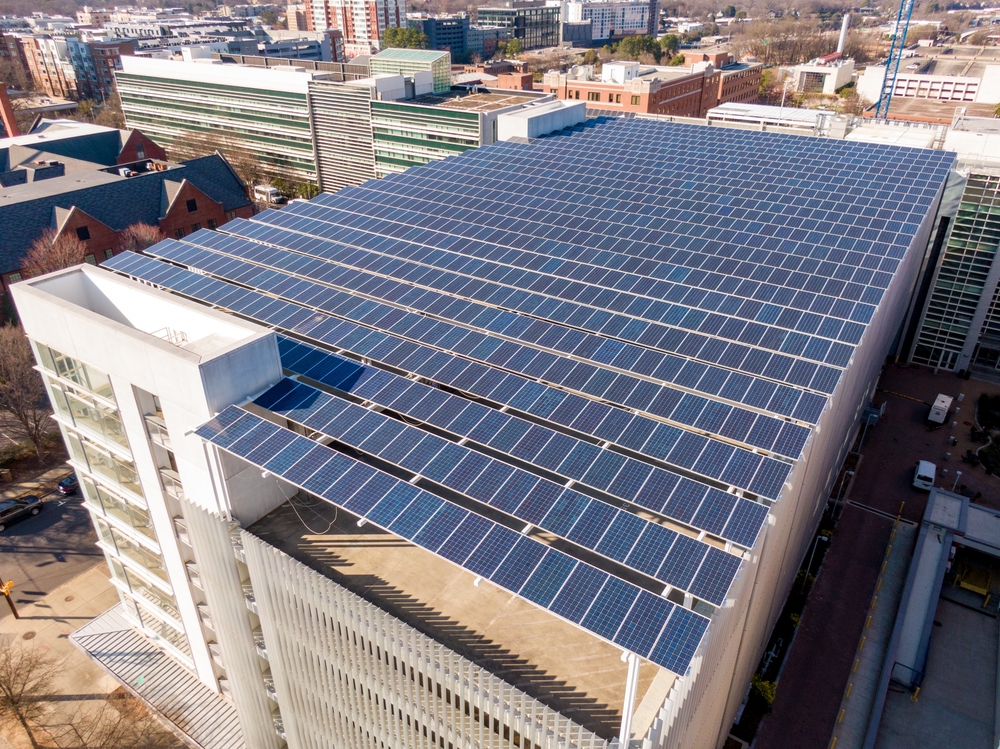
New research by JLL, a global real estate investment firm, finds that distributed energy resources (DERs) are reshaping commercial real estate markets and generating rent premiums.
The paper, “Where Energy Meets Property,” says the real estate mantra is no longer “location, location, location,” but has become “location, resilience, reliability.”
“Tenants are demonstrating clear willingness to pay higher rents for properties with dependable energy systems, and we’re already seeing measurable power premiums – 49% in some cases,” said Josephine Tucker, JLL head of Energy Advisory and Sustainability, Americas. “The classic real estate priorities are evolving from purely location-based to include energy resilience as equally critical factors.”
The paper says that in many markets, the primary limiting factor is no longer capital, land or labor. It is instead grid capacity.
Some sectors have been particularly hard hit, such as industrial & logistics, where almost 90% of companies experienced a power outage in the past year — a statistic from Prologis’ 2026 Supply Chain Outlook, which also found seven in ten executives report fearing power outages more than any other form of disruption.
For this reason, distributed energy use is growing. Commercial distributed energy has expanded fivefold from 2020-2025, far outpacing growth across the broader energy transition market, according to the paper.
“Looking ahead, 90% of respondents indicate they would pay a premium for sites with reliable energy infrastructure, a clear change in how occupiers evaluate locations,” JLL says.
The premium is already emerging in Silicon Valley, where JLL found that over the past three years, “high-power leases” have captured rents on average 49% higher than other leases and 33% higher than rents achieved by new buildings.
DERs are allowing energy to be increasingly embedded in the property asset itself—not just reflected in the utility bill, “creating a widening divide between properties that can secure power as a competitive advantage and those for which power becomes a binding constraint,” says the paper.
“We’re seeing energy infrastructure and real estate values become permanently interlinked across major property sectors,” said Guy Grainger, global head of Sustainability Services at JLL. “Properties equipped with smart energy management and onsite power generation capabilities have a clear competitive advantage in today’s constrained environment. Energy security at operational facilities is now a boardroom discussion for business.”