
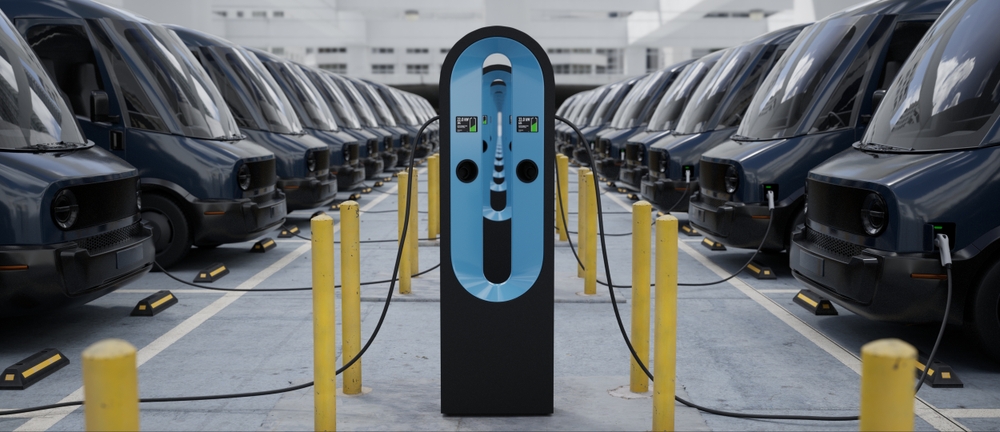
By some estimates, fleet electrification in the US will grow 12-fold in five years, buoyed by favorable economics. This will require rapid changes in fueling infrastructure and create complexities that fleet owners may not always understand.
Stories abound about schools, cities, and businesses contracting for EVs before considering if their local grid can accommodate the new demand, for example.
I was curious about what fleet owners don’t know but should about electrification. So I sought someone who frequently communicates with them: Jonathan Leicester, vice president of business development partnerships at EV Connect. EV Connect is a 15-year-old California-based company that offers EV charging software and services, including the EV Connect App.
“I have come across a situation where someone says, ‘I’ve ordered the vehicles, they’re coming, I don’t have any way to charge them. Can you help me?’ Obviously, that’s not the right way to approach it,” Leicester said during our recent interview.
Subscribe to our free newsletter about all things distributed energy
Here are three insights I gleaned from our conversation about fleet electrification that may help fleet owners new to the journey.
- Talk to your electric utility early
Engaging in an early conversation with your utility is beneficial for two main reasons. First, the utility might provide incentives that significantly reduce electrification costs. Second, it may take longer than fleet owners anticipate to bring power to their site and install the appropriate wires and conduits necessary to deliver it to the charging station. In the aftermath of the pandemic supply chain shortage, installations also faced delays due to a limited supply of EV chargers. Some installations required 12 to 18 months to finish.
“If all of your vehicles are already arriving, that’s a problem for you,” Leicester said.
- Calculate costs and energy needs
Determine how many vehicles you’ll buy, the size of the batteries, and how you will use the vehicles, or put another way, how much battery capacity the vehicles will use each day. If you are phasing in your EV fleet, determine your ultimate needs.
“Then you can work it back to say, ‘Okay, here’s what kind of charger I need, and therefore this is how much power I need. Is it economical for me to do that?’ Figure all of that out before you actually go and order the vehicles and get the vehicles on site,” he said.
Failure to take this step is less prevalent now than a few years ago when EVs were relatively new to fleet owners. The next step is where transportation managers tend to need help now.
- Determine how to monetize your electric connection
This is where EV and ICE fleets are very different. EVs open up the possibility of saving or making money by managing charging to serve electric grid needs.
Sophisticated fleet managers “realize that if you just put all these EVs in, you put all the infrastructure in, and you just use them whenever you want and charge them whenever you want, it could actually cost you more in certain areas than it would for an ICE vehicle,” Leicester said. Left unmanaged, demand charges and shifting electricity pricing can drive up power bills.
Large fleet owners tend to grasp this and are increasingly concentrating on managing their EV electricity demand, particularly if they operate facilities across multiple states or in regions with high energy costs, such as California.
“They are starting to be more sophisticated about it and pulling people in from the energy industry to make sure that they do things in the right way,” he said.
When does distributed energy enter the picture?
Fleet owners will most likely become interested in distributed energy resources to power EV chargers as they make their way up their “hierarchy of needs,” according to Leicester.
At first, they are solely interested in charging their EVs. Then, they tend to look into offering grid services. After that, they’re more likely to consider using on-site energy to power their EV charging stations. Leicester sees “charging hubs” as particularly good markets for distributed energy. These are independent third parties that serve multiple fleets in a geographic area. An airport, for example, can be a good location for a hub because it contains multiple operations and businesses.
Given threats by the Trump administration to end federal EV tax credits, some are worried about the health of the EV and EV charging industries. But Leicester remains bullish and says right now, a “huge demand” exists for EV charging infrastructure.
“If you look at the automotive OEMs, whether it’s trucks and buses or just passenger cars, they’ve invested a lot of money in this technology. Their production and product cycles are very long and there’s a lot of investment there that they’re not going to just stop. This thing is definitely going to keep growing. I think probably the question is just, what’s the speed at which it grows,” he said.