
2025 marked a record year for distributed energy policy, with 113 new state actions enacted—a 79% jump over the previous year. Maryland and Maine led the surge.
The Pew Charitable Trusts provided those statistics in this week’s release of its new State Policy Explorer, an inventory of state legislative activity on distributed energy resources (DER) from 2021 to 2025.
Several trends stand out.
Most states passed some form of DER legislation over the time frame, with activity heightening in 2025, a year in which the federal government began withdrawing incentive support for solar, electric vehicles, and other grid edge solutions.
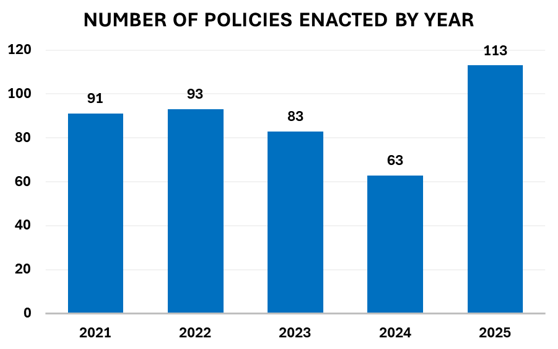
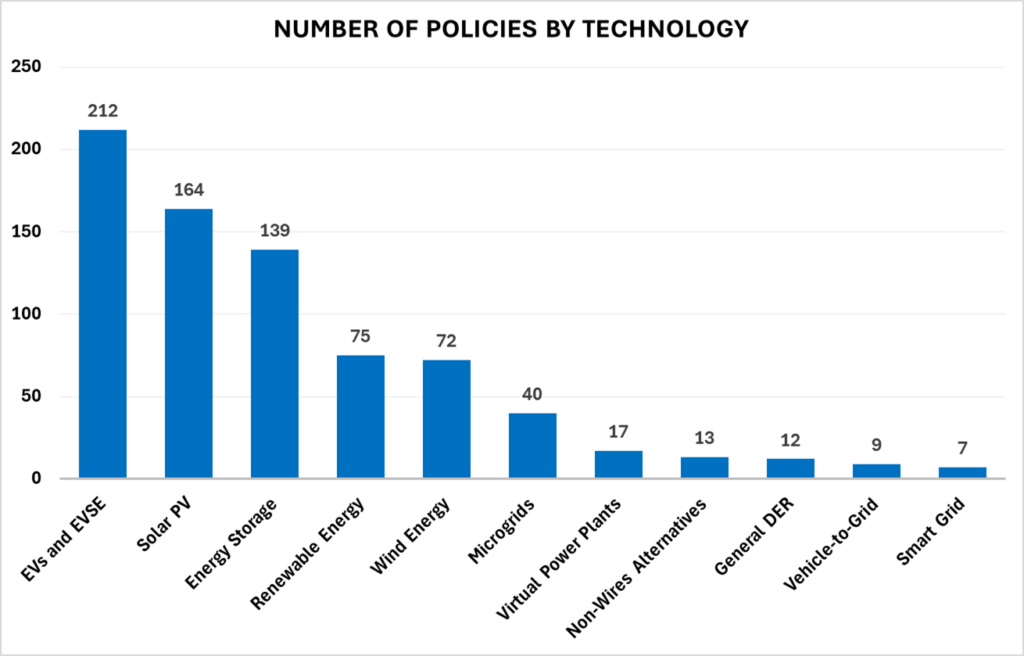
Across the 443 policies tracked, electric vehicles and related equipment accounted for 48%, followed by solar (37%) and energy storage (32%).
Microgrids garnered more legislative action than virtual power plants, likely reflecting growing interest in onsite resilience and reliability. Nearly half of the states enacted policies aimed at improving resilience.
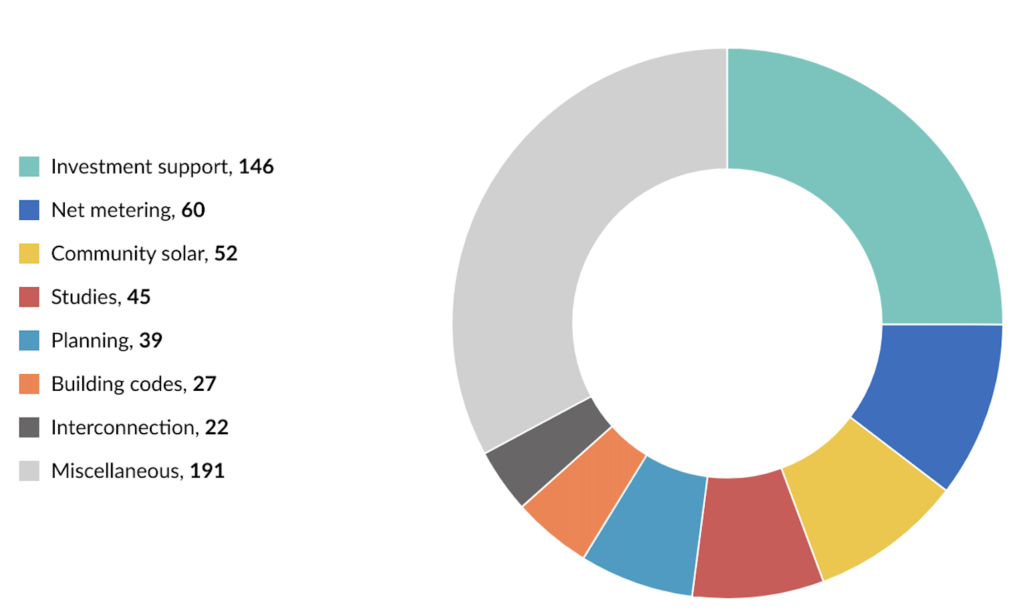
States pursued a range of DER tools, with investment support as the runaway favorite and net metering changes coming in second. Community solar was the subject of more than 50 actions.
A dozen states set targets for deploying specific DER technologies, with many prioritizing energy storage.
Pew developed the Distributed Energy Resources State Policy Explorer in partnership with the North Carolina Clean Energy Technology Center, known for its long-running DSIRE database that tracks renewable and energy efficiency policies.
While not exhaustive, the Pew database represents “a healthy sample,” said Brian Watts, Pew’s officer for energy modernization, during a press briefing Tuesday.
Next, Pew plans to release a playbook in late April to guide state lawmakers and regulators on scaling DERs. It will focus on three priorities: integrating DERs into utility planning, reducing interconnection and administrative barriers, and strengthening grid resilience, with case studies from states to show the ideas in practice.
To use the tool, go here to find more than 400 legislative actions on DERs from 2021 to 2025.