
Energy policy often changes when a new president arrives in Washington, D.C. But this time, it feels different—and it’s not just because the energy policies of the Trump and Biden administrations differ dramatically.
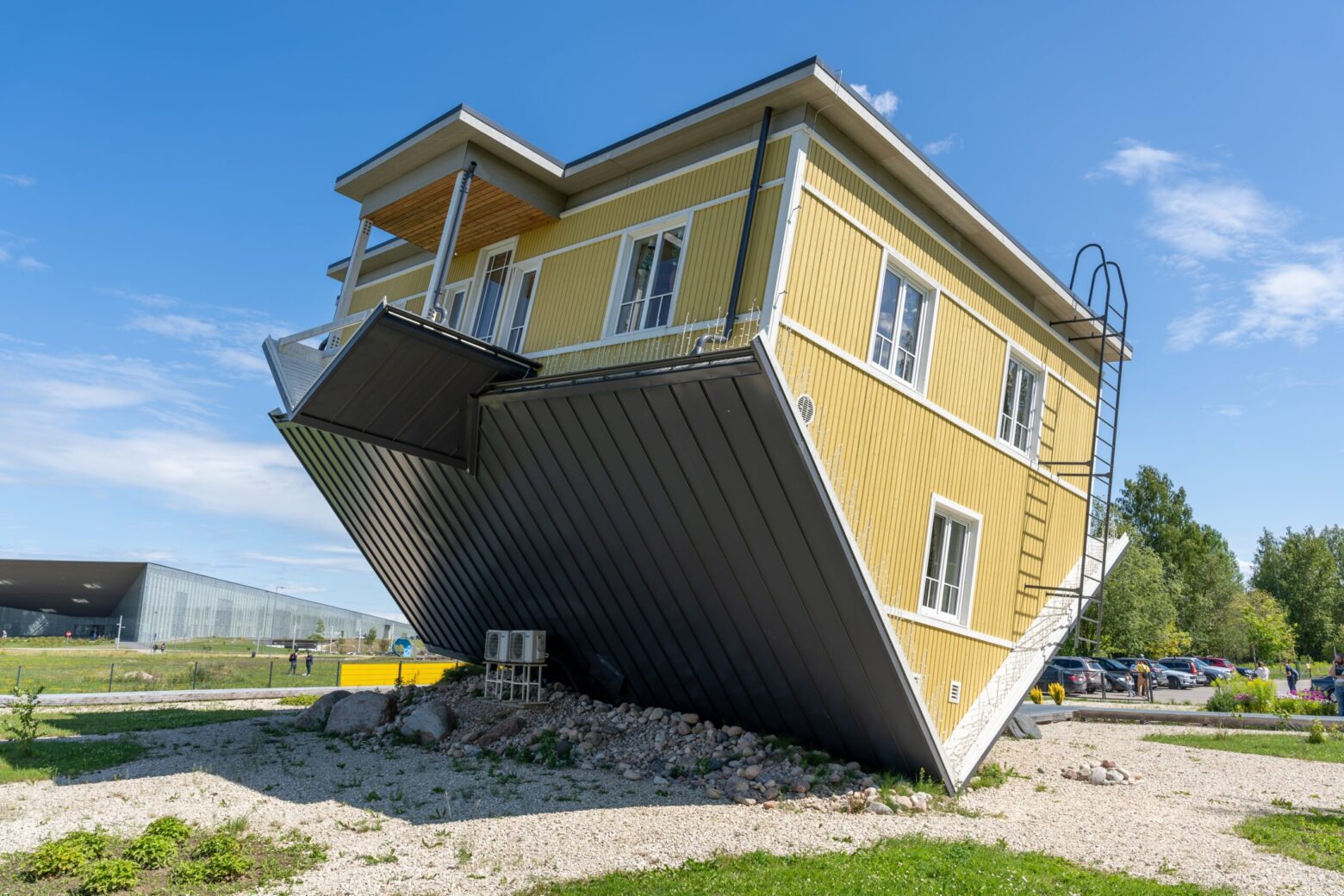
The new administration seems intent on turning the energy narrative upside down. What was a problem is now a solution. What was a solution is now a problem. The script is flipped.
Nowhere is this clearer than in the Trump administration’s national energy emergency declaration released last week.
Join us for the next Energy Changemakers livestream, “How Do We Position Distributed Energy Now?” Wednesday, February 19, 12:15-1:15 pm EST. Register here for the Zoom link. (Members of the Energy Changemakers Community can pick up the link on the Events Page.)
Villainizing the innovators
West Coast and Northeast states are energy innovators, leading the way in creating policies that foster efficient and clean energy. While policies vary from state to state, they generally operate on an efficiency first principle. Before building new power plants, they try to get the maximum megawatts out of the system—achieve more by doing less, a sound economic principle. When new construction is warranted, they pursue clean energy to minimize environmental damage. But according to Trump’s emergency declaration, these states are “dangerous” and “devastating to prosperity.”
Even more odd is how the new administration is treating energy reliability. An aging grid vulnerable to power outages, especially during severe weather, is a real problem. Before this week, distributed energy and distribution grid upgrades were viewed as key solutions. The emergency order mentions neither.
Instead, the order promotes “the supply, refining, and transportation of energy.” This implies fossil fuel production, big infrastructure and the movement of energy over vast expanses — the kind of inefficiency distributed energy avoids since it produces energy close to where it is consumed (e.g., rooftop solar panels.) Again, the problem becomes a solution in Trump’s energy world.
There is no energy emergency
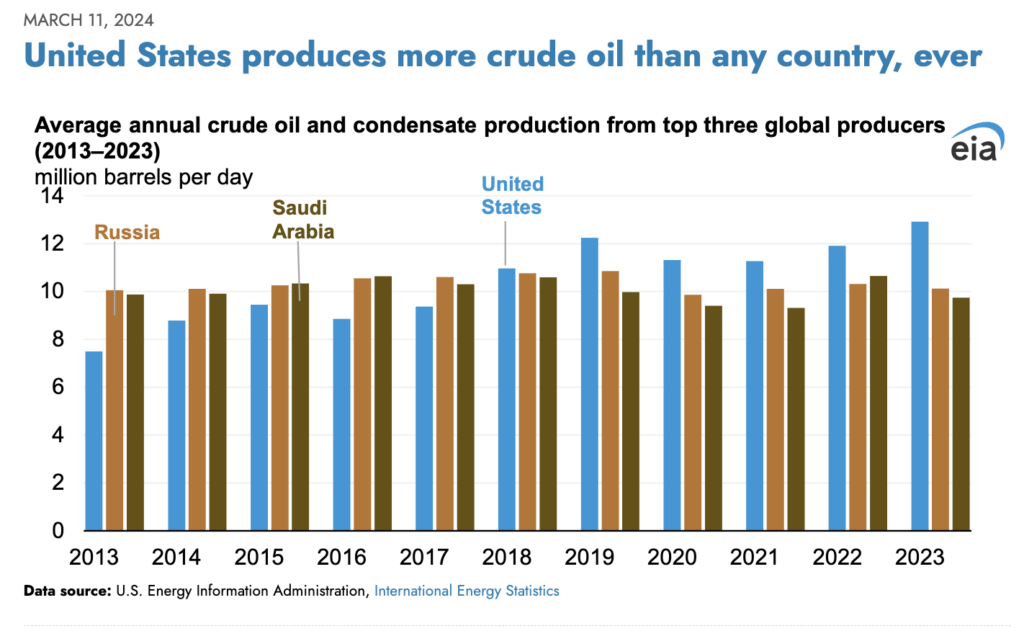
The emergency order is based on the premise that the US faces a “dangerous” energy shortfall. However, the US now produces more crude oil than any nation at any time in history. And no other country is likely to best the US any time soon because of its high production level (13.0 million barrels per day). Russia, the second-largest producer (10 million barrels per day), has announced production cuts.
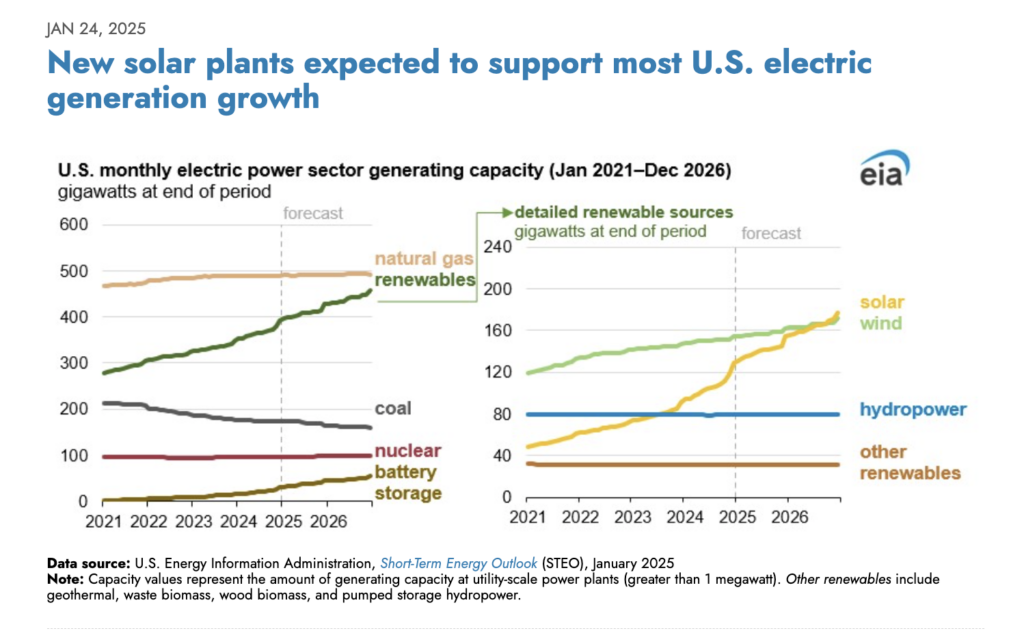
Electric production is also growing, according to a report released yesterday by the US Energy Information Administration. Solar is being added more quickly than any other electric resource with 37 GW installed last year and renewable sources were the second-largest contributor to U.S. power generation.
There are legitimate worries about meeting growing electric demand from AI. How much demand and how fast is under debate. The data center industry doubled its electric demand from 2017-2023 and by 2028 is expected to consume 6.7% to 12% of US electricity, up from 4.4% in 2023, according to the US Department of Energy.
But data center energy consumption is localized, making it a regional, not national, problem centered in areas of rapid data center growth like northern Virginia, where forecasts show electric rates rising as demand outstrips supply. If this constitutes an energy emergency, it’s reasonable for these areas to prioritize distributed energy because it’s quicker to install than large-scale energy projects. Rooftop solar and batteries can help offset the rising grid power costs for consumers.
How do we position distributed energy so that it doesn’t get buried?
The emergency order doesn’t directly attack distributed energy, nor does it promote it. The administration appears to be resurfacing an “all of the above” energy agenda (See the Senate hearing on Chris Wright’s nomination as US energy secretary). But Trump has already revealed that “all” doesn’t mean “everything” when calling for a halt to federal wind leasing.
What’s clear is that the Trump administration plans to try to change how the nation thinks and talks about energy, and not in a way that favors clean, distributed energy.
So, how should the distributed energy community respond to this? What is the counter-narrative? What arguments should it make, what language should it use, what examples should it promote? How should distributed energy position itself to avoid getting buried in the national discourse?