
A mix of market and regulatory forces is reshaping the distributed energy resource (DER) sector. New business models, new entrants, and new customer classes are altering the industry’s contours.
This shapeshifting was underway even before last year’s passage of the One Big Beautiful Bill Act, but the legislation accelerated it, pushing DER companies to seek new profit centers as federal support waned. Data centers—with their enormous energy appetite—are also helping reshape DER providers.
The shift spans the market, from mom-and-pop solar installers to Fortune 500 conglomerates. Change is widespread, and the eventual winners remain uncertain. Still, three developments stand out as defining the current phase of the industry’s evolution.
- Solar companies are broadening their offerings, moving beyond panels to include batteries, building electrification services, and increasingly, microgrids.
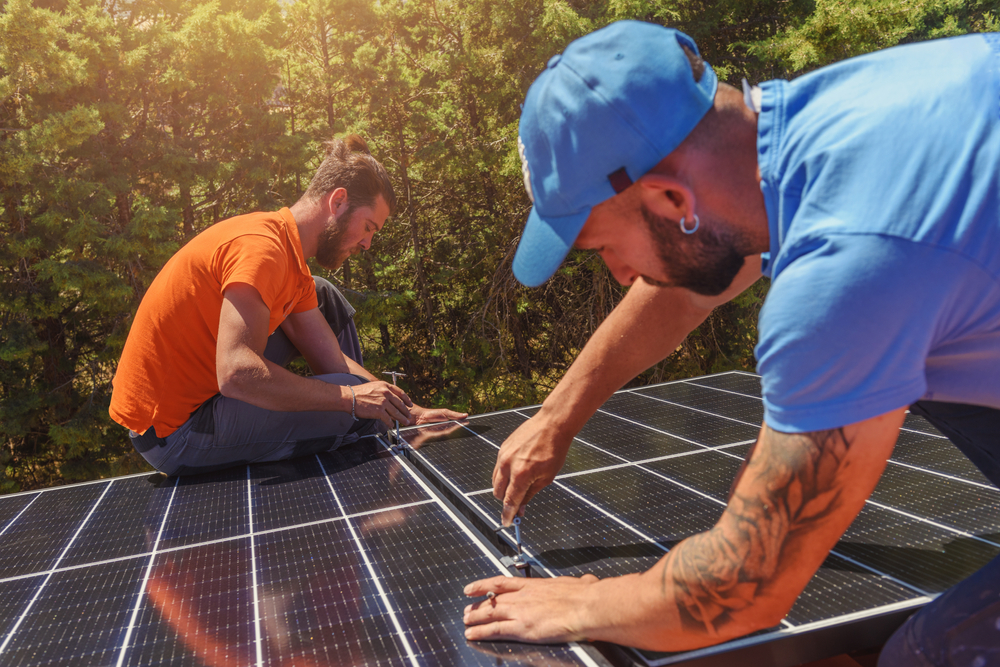
Some of these changes began with the loss of net metering, such as this California model that adds heat pumps and partial grid defection to a residential solar installer’s business model.
More recently, New York-based SolMicroGrid, a portfolio company of Morgan Stanley Energy Partners, launched a program to help businesses upgrade existing solar systems to microgrids.
In Hawaii, Solar Plus Kauai, a local solar electrical company since 2002, now offers a microgrid – a hybrid solar system with solar, batteries, generators, and automation for households to go off-grid.
Renova Energy, a California-based home solar and storage company, recently announced it is morphing into a new company, Mycrogrid. Details remain scarce about the company’s plans, but CEO and founder Vincent Battaglia says a new business model is in development with an unveiling planned for the spring, according to local media reports.
- From the outside, other energy companies are entering grid-edge markets, drawn by growth opportunities in distributed energy resources and adjacent services.
Some of the new companies are even utility-scale developers. For instance, this week, Connecticut-based GameChange Solar announced it is expanding beyond supplying utility-scale solar trackers and fixed-tilt racking to include complex distributed energy development for businesses and communities.
Why? “Distributed generation represents a fast-growing and strategically critical segment of the renewable energy market,” said CEO Phillip Vyhanek.
EzFill offers an example of a company that arrived at distributed energy from an entirely different route. Founded in 2016, it provided on-demand fuel delivery. Last year, the Florida company rebranded as NextNRG, reflecting a shift toward microgrids, battery storage, and wireless EV charging. Investment firm Hudson Sustainable Group entered a $13 billion agreement with NextNRG to finance a national portfolio of energy assets. NextNRG is focusing on healthcare microgrids and has announced two long-term microgrid power purchase agreements, one with an assisted living facility and the other with a nursing home, both in California.
Meanwhile, conventional energy company NRG Energy entered the less conventional virtual power plant (VPP) arena with final approval this week of its acquisition of CPower. The deal is part of a larger acquisition by NRG of CPower’s parent, LS Power, and its 13 GW of natural gas-fired power plants. NRG not only owns 25 GW of power plants, but is also one of the nation’s largest competitive retail suppliers. The acquisition brings the backing of a Fortune 500 energy company to CPower, already one of the nation’s largest commercial VPP companies.
- A new class of firms focused on mega-microgrids is emerging, driven by the surge in large, concentrated electricity demand from data centers.
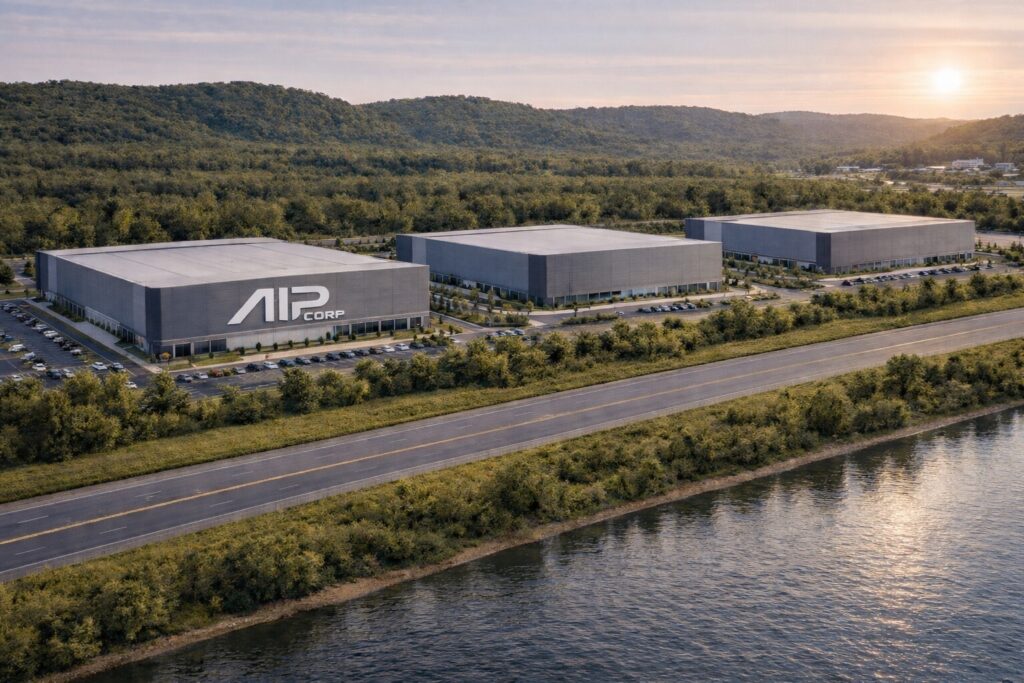
Another new breed of player has entered the market to develop large microgrids to serve data centers (an arena also attracting traditional microgrid developers, like Enchanted Rock, Schneider Electric and Siemens.)
This week, Fidelis New Energy and 8090 Industries launched American Intelligence & Power Corporation (AIP Corp) to develop, own, and operate large-scale microgrids for hyperscale and enterprise data center customers. In some cases, they also build all or part of the data center.
Fidelis, a Texas company, builds biofuel and carbon sequestration facilities for industrials, an 8090 Industries invests in industrials. AIP’s flagship project, the 8 GW Monarch Compute Campus in Mason County, West Virginia, has special microgrid status granted under a new state law meant to speed microgrid development.
To dive deeper into changes in the DER market, see the 2026 Market Survey: Microgrid and Distributed Energy Projects Grow in Complexity, prepared by Energy Changemakers with Xendee and Factor this Renewables.