

It’s a heady time for the power industry. Electricity demand is growing for the first time in decades, partly to support the expansion of new data centers to serve AI. The utility industry is understandably excited – maybe too excited.
A study released last week by the Southern Environmental Law Center finds a “bias of overstating electric future demand” that stems from inflated expectations about data center development.
What makes them say the numbers are bloated?
First, the industry proposes many more data centers than it expects to build, the study says.
“Data center developers have incentives to duplicate requests in different jurisdictions for electric interconnection for the same facility, and industry reports indicate this has been ongoing,” says the study, prepared by London Economics International.
Meanwhile, utilities have reason to buoy the high-end demand scenarios because they justify the construction of more transmission lines and power plants, which generate revenue for them.
Sanity check: Where will the chips come from?
Notably, the study conducted a “sanity check” on AI forecast hype by examining the availability of semiconductor chips for the data centers. It turns out the US won’t have nearly enough. It would need to corner the market on approximately 90% of the chips produced globally to meet the projected data center growth through 2030.
The authors based this figure on an average annual growth rate of 10.7% in chip manufacturing, a significantly faster rate than the 6.1% growth rate observed over the past decade. Even at the higher rate, manufacturers will be able to satisfy only 63 GW of global data center demand, while the US would demand 57 GW.
The findings echo a recent essay, Artificial Intelligence Meets Natural Stupidity: Managing the Risks, by Amory Lovins, RMI cofounder and chairman emeritus. Lovins not only questions projections of data center construction, but also the forecasts of how much energy those built will need.
Subscribe to the free Energy Changemakers Newsletter.
These researchers are sounding an alarm because overestimating future energy demand can be a costly societal mistake. Utilities build infrastructure based on future projections. If they overshoot, power plants and transmission lines get built that aren’t needed, and ratepayers foot the bill.
Another reason to avoid AI forecast hype
But there is another reason it is a bad idea to overhype electricity demand forecasts. It’s become a political excuse to diminish renewable energy in favor of fossil fuel generation.
That became apparent from a recent report by the Department of Energy, also released last week: “Evaluating the Reliability and Security of the United States Electric Grid.”
On the plus side, seeing a government agency focus on electric reliability is a good thing, and the report offers a lot of meaty data about our grid. It also avoids the hype of extreme data center projections, but settles on a median demand growth forecast of 50 GW, which is close to LEI’s 57 GW figure.
But the DOE’s premise is narrow, seeming to equate grid reliability with winning “the AI arms race.” And its solutions are even narrower. It says the US has abundant resources, naming oil and gas, coal, and nuclear. Renewable energy is notably absent, although solar has been the fastest-growing form of electricity in the US for several years and often is the cheapest.
The real and immediate threat to electric reliability
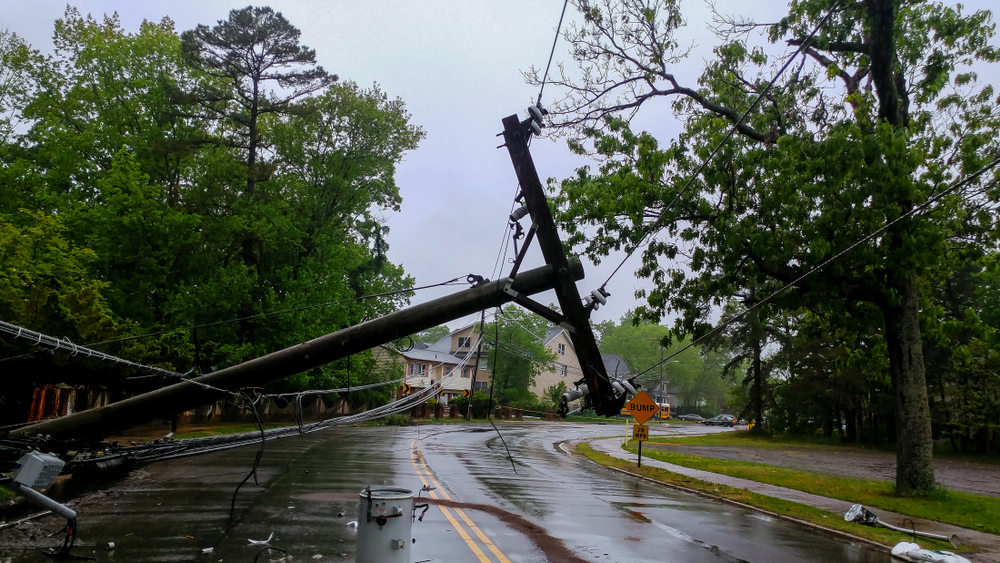
Yes, it’s wise to prepare for the demand growth from AI. However, achieving electric reliability requires more than serving the future. In reality, bad weather will be the primary cause of power outages affecting homes and businesses this year. These outages will likely cost the economy tens of billions of dollars.
Building big power plants and transmission lines, which will take many years, won’t change that. Improving the distribution grid and adding quicker-to-build microgrids and distributed energy will.
Inflated numbers that generate hyperbolic fear could cause us to overbuild for the future and neglect today.