
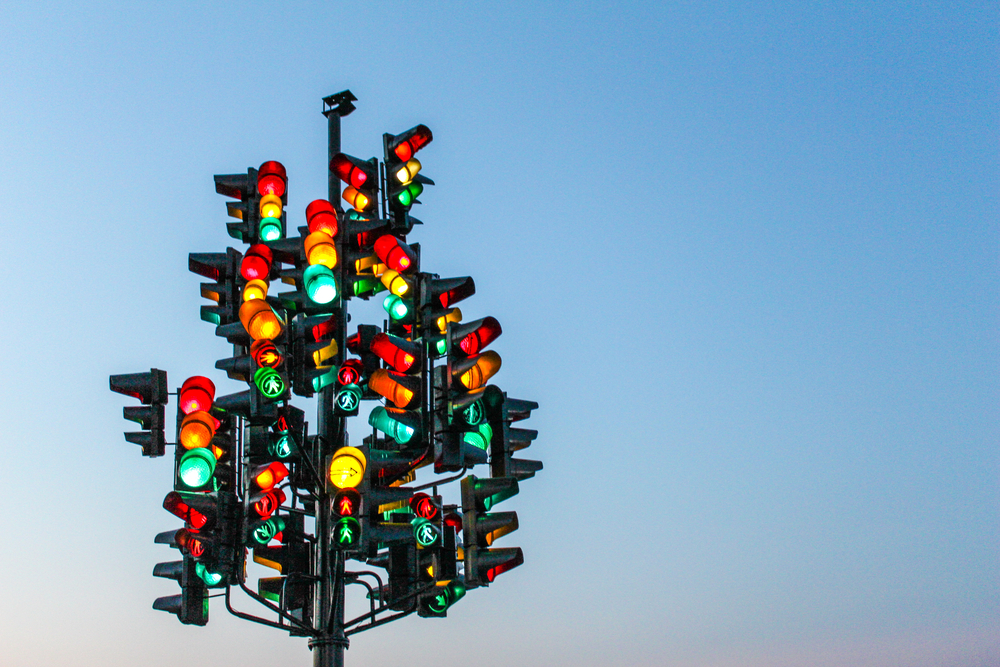
It’s been a noisy, jarring couple of weeks. Amidst the economic volatility and screaming news cycle, I’ve been scouting for some clear signals about the power industry, particularly how all of this will affect clean and distributed energy.
Because it takes a long time to develop most capital-intensive energy projects, the energy industry relies heavily on forecasts in decision-making. And like most businesses, it disdains uncertainty.
Unfortunately, uncertainty is high at the moment. Forecasts are murky because of the rapid-fire, on-again-off-again tariff changes since April 2 and bond and stock market volatility. Add to that confusion about what will become of the Inflation Reduction Act and its clean energy tax incentives.
All of these factors make energy investors wary. Are there any clear throughlines to discern what’s ahead? Nothing is simple. It never is. A range of variables could affect the prospects of clean and distributed energy. Here are some push and pull signals of note.
Watch the weather
Should an economic downturn occur, energy consumption will likely fall, which could undercut the need for more clean energy. But there are wildcards, including the weather and unforeseen social patterns.
The Great Recession of 2007-2009 caused a 5.1% drop in electricity use. The 2020 pandemic was worse. It caused a 7% decline in overall US energy use, but it came with a twist. Residential electricity sales (which account for more than 37% of sales) grew 2%—even as the economy shut down—because people retreated to their homes to work.
2017 saw another downturn in electricity consumption, but in this case, it had nothing to do with the economy. Mild weather caused a 2% drop in retail electricity sales. People ran air conditioners less because it was cool outside.
Last year, the world experienced the opposite effect.
Electricity demand grew 4% worldwide in 2024, up from 2.6% a year earlier, according to Ember’s Global Electricity Review 2025. Demand grew 3% in the US, making demand per capita its highest since 2014. It wasn’t data centers or electric vehicles that caused the world to use more electricity. It was the weather. People cranked up their air conditioners because it was exceptionally hot.
Subscribe to the free Energy Changemakers Newsletter
More demand for power seems inevitable
Weather fluctuates, and this year could prove cooler and require less air conditioning use. But the climate is heating long term, and forecasts call for growth in air conditioning. On top of that, it seems clear data centers, electric vehicles and industry will also increase electric demand in the US, although by how much — and exactly when and where — remains open to debate.
Strong signal for distributed energy
Growing demand is likely to make clean and distributed energy look more appealing to businesses and consumers as they seek hedges against expected hikes in electricity rates. That’s been happening for several years in regions of the country where electricity prices are high and state policies favor distributed energy.
Distributed energy also finds a growing market among data center developers. Because of the long lead times to build utility-scale projects caused by supply chain disruptions and interconnection delays, they are choosing to build power onsite.
Energy resiliency and reliability also continue to be drivers. Again, watch the weather. Interest in distributed energy heightens after storms cause lengthy power outages.
And everyone — whatever their politics — is now talking about the importance of energy security, a clear benefit of on-site or local energy.
Meanwhile, renewable energy is emerging strong from a banner year. In 2024, the world experienced record renewables growth led by a 29% acceleration in solar. As a result, clean power served 40% of global electricity generation, according to the Ember report. In the US, wind and solar overtook coal in a historic first. Natural gas generation grew 3.3%
Weak signal for coal
Then there is coal. President Trump, earlier last week, signed an executive order to boost the use of coal-fired plants, but the announcement may be mere ceremony, given the unlikelihood of any significant development of new coal-fired plants in the US. Coal fell to just 15% of US electric generation in 2024, an all-time low and part of a “terminal decline” since its peak in 2007, according to Ember.
“Nothing here seems to change the economics, and it’s the economics that have held coal-fired power production down,” wrote Rob Gramlich, president of Grid Strategies, on LinkedIn.
He added the US Department of Energy “has no authority to prevent coal plant retirements or force an owner to lose money by running the plant. We have seen no evidence that any company is considering building a new coal plant or that supply chains or manufacturing could support it.”
But still…
Even as fossil fuels decline, two big issues loom that could delay the growth of clean and distributed energy: tariffs and lack of political support from the Trump administration.
On the tariff front, US solar might fare better than other sectors, according to Bloomberg. The US industry stockpiled about 50 GW of solar panels before the tariff announcements. Batteries, however, are likely to take a big hit with a potential 17.5% increase in storage battery prices by next year because of the US dependence on lithium from China.
On the energy policy front, a promising signal emerged last week when four Senate Republicans sent a letter to Sen. Majority Leader John Thune arguing against dismantling the Inflation Reduction Act Tax credits. Last month, 21 House Republicans took a similar stand. However, some analysts question whether Republican support will hold during budgetary deal-making.
And as always, energy remains subject to larger economic headwinds. During the Great Recession even federal incentives couldn’t help many projects overcome financing hurdles caused by a tight global credit market.
Hit a wall or knock it down?
Clean energy saw record growth in 2024 that continued in early 2025. Bloomberg reported that in the first quarter, venture capitalists and private equity firms invested more than $5 billion into US climate tech startups, a nearly 65% increase compared to a year ago. And Ember found that March brought another record for clean energy use, with the scales tipping toward renewables. Fossil fuels, for the first time, generated less than half of US electricity. Clean generation technologies provided 50.8%.
So good signals are flashing for clean energy and distributed energy, even if they’re not always easy to see in today’s fog of market and policy confusion. Demand for electricity remains on the rise, solar is a low-cost and easy-to-install option, and consumers are increasingly attracted to the attributes of distributed energy — security, local control, resiliency and its toolkit for price management.
Clean energy and distributed generation came barreling out of 2024 with force. Now, they face walls but may have enough momentum to knock them down.