
When Zohran Mamdani became mayor of New York City earlier in January, it was clear that the democratic socialist was pro-clean energy.
But what would that mean practically?
Would he tilt toward a policy of buying green energy in bulk from distant wind and solar farms, or pursue a bottom-up strategy using distributed energy resources — rooftop solar, storage, microgrids, electric vehicles — within the city?
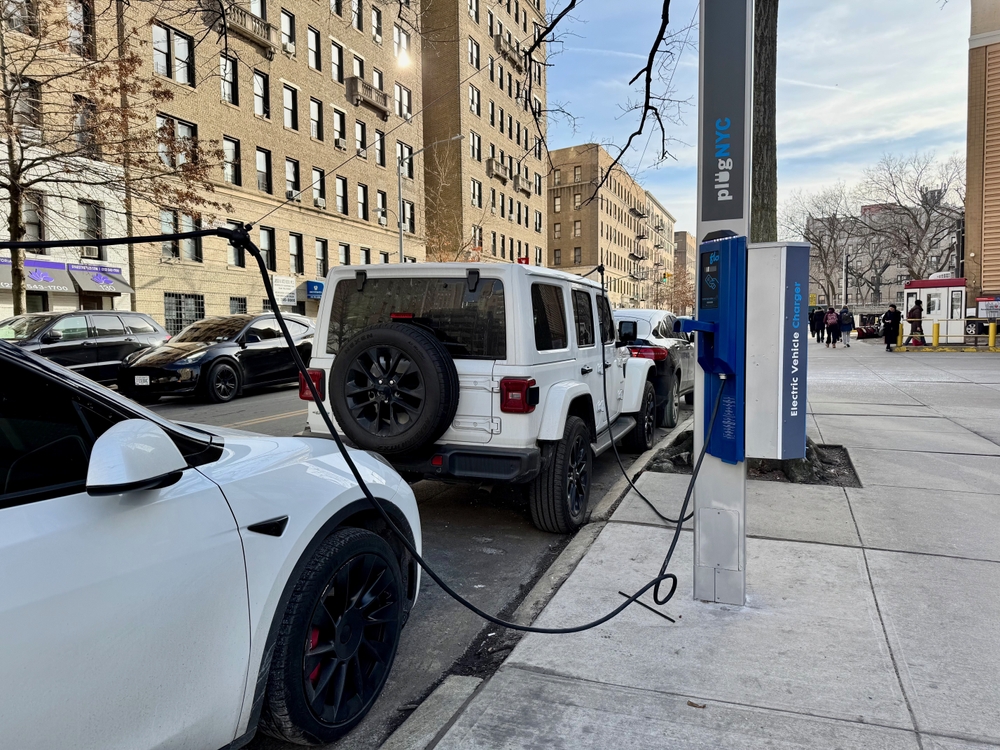
So far, the answer looks like bottom-up — or, given this week’s news, curb-up. The city has signed a deal to install 700 EV chargers curbside to make it easier for rideshares and taxis to plug in.
It’s the latest of several pro-distributed energy moves by the administration:
- New York City Comptroller Mark Levine last month recommended that the city — for economic purposes — make its buildings into a network of energy assets using solar, storage and other forms of distributed energy.
- Also last month the city announced it would invesgiate installing a thermal energy network to cool down a subway complex, which would be a first for a US urban transit system
- On Earth Day Mamdani released a five-year sustainability plan that includes transitioning 20,000 housing authority units to heat pumps, installing induction stoves at 10,000 apartments and 150 public electric vehicle charging stations in parking lots.
Why curbside EV charging
In partnership with the New York Power Authority, the city chose startup it’s electric to build out the curbside EV charging network. The Brooklyn-based company will install the Level 2 chargers, manufactured in Queens by Boyce Technologies. They’ll be placed in all five borough over three years.
“Just as fire hydrants are on every street, our vision is for EV chargers to become that normal — infrastructure New York’s kids simply grow up with,” said Nathan King, co-founder and CEO of it’s electric.
It’s electric also announced an oversubscribed bridge round to support the company through this fast period of growth. The round led by Halogen Ventures, with participation from Wisdom Ventures, Future Communities, E8 Angels,mDiPalo Ventures, Alumni Ventures, and Gaingels, alongside returning investors including Uber,mFailup, Gratitude Railroad, and The Partnership Fund for New York City, brings the company’s total funding raised to-date to $15 million.
The project evolved out of an earlier pilot that brought 88 curb-side chargers to the city. It also reflects the administration’s push to use curbs for a wider range of public needs. The chargers are expected to help the city reach a goal of electrifying Uber and Lyft by 2030. The New York City Department of Transportation will operate the chargers and set prices.
New York City has more than 80,000 rideshare drivers and most park on the street rather than in a garage or driveway, according to it’s electric. The buildout will target areas with limited off-street parking frequented by taxis and ride shares. These areas tend to be ignored by private charging companies
“More accessible charging is critical to helping Uber drivers make the switch to electric,” said Josh Gold, senior director of public policy at Uber. “Rideshare drivers cover significantly more miles than the average motorist, so expanding charging where they actually need it can deliver outsized benefits for air quality while strengthening the city’s charging network for everyone.”
More EV chargers also open the opportunity for more microgrids to electrify them and more virtual power plants to aggregate them into grid resources. To be clear, the Mamdani administration isn’t saying this and hasn’t announced a grand distributed energy agenda.
But it appears to be building one, piece by piece.