
Guest Article
In 2019, more than 11,000 scientists in 153 countries — ranging from Morocco, Egypt, and Cameroon to Russia, China, and the United States — counseled all of humanity that the Earth “clearly and unequivocally faces a climate emergency.” UN Secretary-General António Guterres declared in October 2021 that the climate crisis is a code red for humanity.
This was not the first of such warnings, nor are they likely the last.
Earlier this year, researchers from the Potsdam Institute delivered an updated assessment finding that the world economy is committed to an income reduction of 19% within the next 26 years, independent of future emission choices. My calculations indicate a US gross domestic product (GDP) loss that might approach the rough equivalent of $4.9 trillion (2024$) in 2050 alone.
Indeed, there is a big need for a shift in the economic paradigm. MacArthur Fellow Saul Griffith underscores a climate emergency, even as he documents the real possibility in Electrify: An Optimist’s Playbook for Our Clean Energy Future.
And yet? It is so much bigger than climate change alone. We must tackle what I often refer to as the Four Horsemen of the Apocalypse. But as you’ll read, I think there may be a hidden “fifth horsemen” of the Apocalypse. Bear with me as I tease it out.
First, we have the White Horseman, often called “Conquest.” In this case, we have the pandemic and ecosystem damage. We keep pushing land, soil and water with our roads, developments, and waste, which encourage zoonotic leaps and continue ravaging Earth.
Second?
Yes, the Red Horseman of War, which is clearly the growing burden of climate change. In the 1980s, we averaged at least $19 billion in structural damages from climate-related fires, droughts, and storms. And that does not cover health, employment, or other social costs. In the last three years, climate disasters cost an average $147.3 billion in inflation-adjusted dollars. And if my numbers are right? By 2050 it could be four times bigger. Yet, it is still so much bigger than that.
And third? Hmmm. . .
The Black Horseman of Famine. Or in this case, the slow erosion of our social and economic well-being as the non-productive uses of energy and other resources continue to mount. For the first time in 2020 our anthropogenic mass finally equaled all the biomass on Earth. We are, indeed, into the Anthropocene. And it is causing big and diminishing resource productivity — so that while we worry about the nation’s fiscal burden or debt, the growing resource burden and debt may be much, much bigger.
Turning finally to…
The Pale Horsemen of Death. We suffer so many inequities, whether racial, sexual, income or climate injustices. We have pushed ourselves — all of humanity — into a corner where all four Horsemen and their many related burdens must all be solved together. Yes, we can do it with much greater levels of energy and resource productivity, together with renewables, but we may have placed ourselves into a “yes and” position.
And yet? I think there is the lingering Fifth Horseman, what I will call, The Gray Horseman of Mistrust and Uncertainty — the lack of trust in our different forms of social institutions, communities, and our many different forms of governance. We must learn to communicate the science and enable the trust — not in ways that take away our individual sense of pride or our opportunities, but to recognize the need for a more trusting, greater level of connection and interaction to deal with the erosion of the Earth and our social, environmental, and economic well-being — together. Unless more of us come together quickly and create an immediate response, we face either a hard decade of getting things done — the huge reduction in greenhouse gas emissions and the replenishment of our many ecosystems and resource productivity — or we likely face a bad century in oh so many ways. . . Ouch!!!
And yet? There is some good news ahead. As colleague Jeremy Rifkin, together with me, Black & Veatch Engineering, the World Resources Institute, and Smith-Gill Architecture, all laid it out for Senate Majority Leader Chuck Schumer in 2021, investments in people and a much more energy-productive infrastructure can avoid the worst of the damages even as they save huge amounts of money and create an average 15-22 million net new jobs over the next several decades. But only if we choose to make it happen.
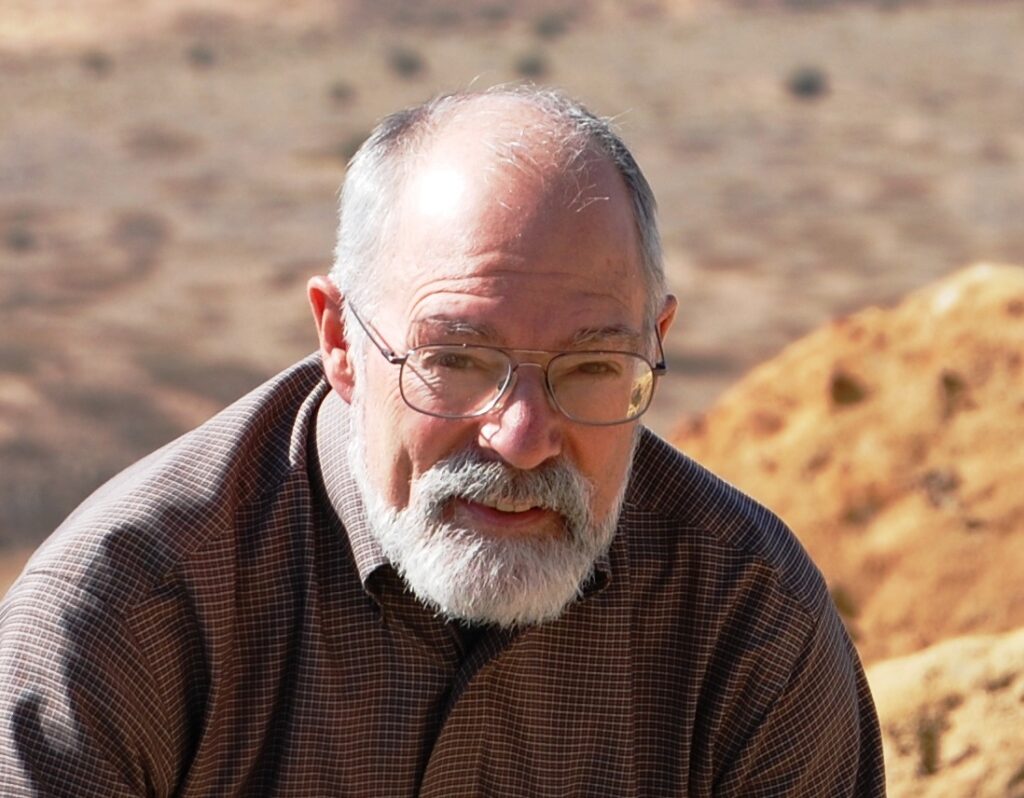
John A. “Skip” Laitner is an international resource economist and the principal and founder of Economic and Human Dimensions Research Associates, based in Tucson, AZ. He can be reached at EconSkip@gmail.com.