

The Voice of Distibuted Energy
Menu
  • Stories
    • Distributed Generation
    • Storage & EVs
    • Virtual Power
    • Energy Efficiency
    • Policy
    • Microgrids Now
    • Prosumers
    • Decentralized Grid
  • Podcast
  • Resources
    • White Papers
    • Case Studies
    • Content Services
  • About
  • Newsletter
  • Substack
Energy Changemakers
Subscribe
Decentralized Grid

In Case You’re Wondering if You are in the Right Business

Yes, the Electric Sector is the Place to Be: Report

by Elisa Wood

age of electricity
Shutterstock.com
November 15, 2025
Share

With last week’s release of its annual World Energy Outlook, the International Energy Agency proclaimed we’re now in the Age of Electricity.

Energy demand is growing, but electricity demand is growing even faster. 

Investors are responding. Spending for electricity supply and end-use electrification already accounts for half of today’s global energy investment, according to the report.

And demand growth is no longer largely confined to places like Sub-Saharan Africa and parts of Asia.

“In a break from the trend of the past decade, the increase in electricity consumption is no longer limited to emerging and developing economies. Breakneck demand growth from data centres and AI is helping drive up electricity use in advanced economies, too,”  said Fatih Birol, IEA executive director.  “Global investment in data centers is expected to reach $580 billion in 2025. Those who say that ‘data is the new oil’ will note that this surpasses the $540 billion being spent on global oil supply – a striking example of the changing nature of modern economies.”
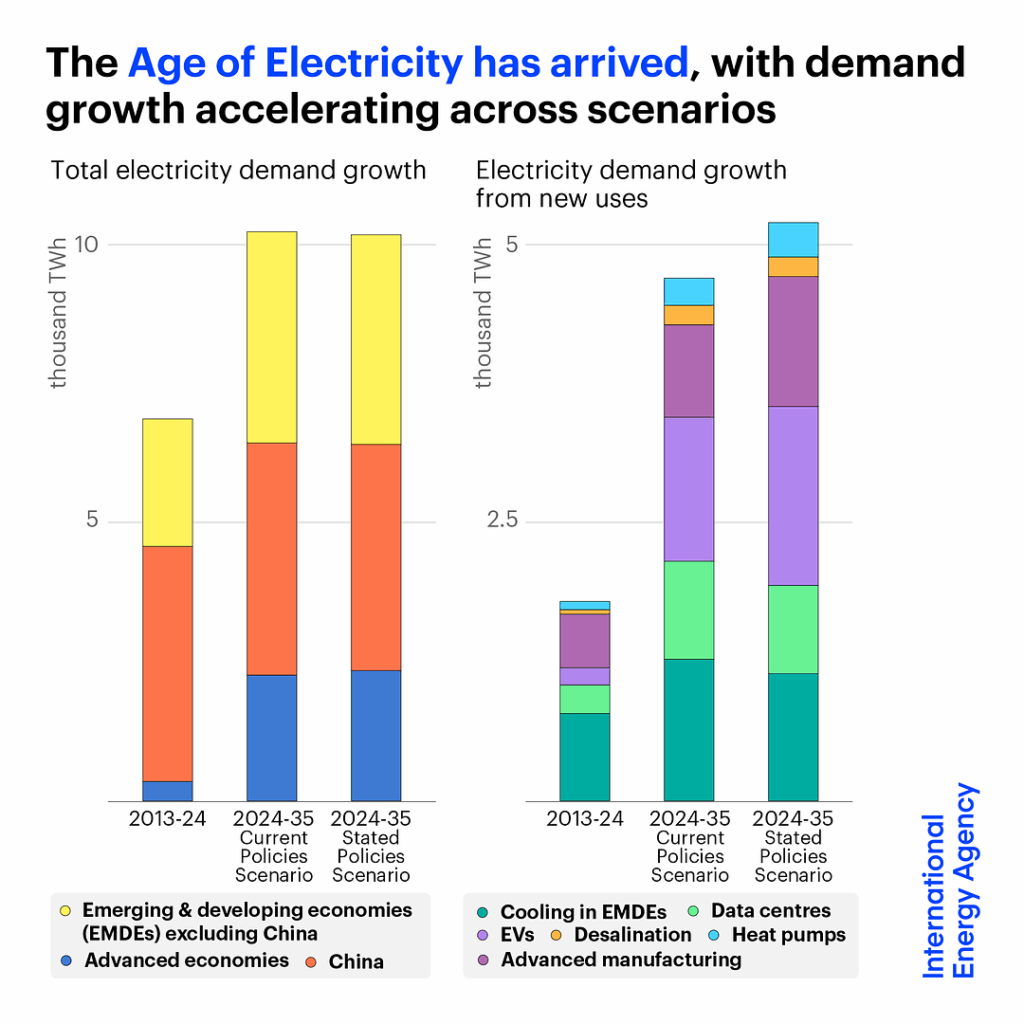
Age of Electricity

Minigrids in emerging economies

But when it comes to growth in decentralized energy, emerging economies remain where most of the action is.  Around 730 million people still live without electricity, and 2 billion cook with unsafe fuels.

IEA outlines a plan to bring electricity to about 80 million people annually by 2035 by building grids, minigrids — which IEA defines as off-grid microgrids   — and stand-alone systems such as solar and batteries.

By 2035, over 45% of new electric connections in these economies are expected to be from grid extensions; 30% from minigrids (mostly solar), and 25% from stand-alone systems.

IEA says it will cost USD $250 billion in investment between 2025 and 2035 to fund universal electrification. The figure includes capital expenditure, the cost of installing grid or minigrid lines, and equipment costs for decentralized solutions. 

That’s $23 billion per year — a sevenfold increase in current spending on electricity access and “a sizeable portion of expected power sector investment outlays in the coming years,” the report says. Funding minigrids, in particular, requires access to cheap debt. 

Subscribe to our free weekly newsletter about all things distributed energy.
Subscribe

Top Podcast

energy changemakers podcast

A Complete List of Energy Changemakers Podcasts

The Energy Changemakers Podcast, with host Elisa Wood, is available every other Wednesday on Apple and Spotify.

Latest Resources

2026 Market Survey: Microgrid and Distributed Energy Projects Grow in Complexity

Reports of distributed energy’s demise have been greatly exaggerated, according to a 2025 survey of distributed energy and microgrid industry professionals. When the One Big Beautiful Bill Act became law in July 2025, many industry experts feared solar-heavy distributed energy development would dry up with the loss of federal incentives. While survey respondents (67%) say […]
Ameresco energy allies

Energy Allies: Communities and Utilities Building Resilience Together

This white paper examines how successful partnerships among communities, utilities, and energy service providers can improve the grid and achieve mutually beneficial outcomes.
microgrids as building blocks

Microgrids as a Building Block for Future Grids

This white paper is the fourth in a series of seven white papers in support of the DOE Microgrid R&D Program and presents a broad vision for future grids where microgrids serve as a building block along with technologies that would need to be developed, use case scenarios and the research targets. The DOE Microgrid […]
utility bills

Utility Bills are Rising: PowerLines

New polling by PowerLines, a nonpartisan consumer education nonprofit, reveals the toll of rising utility bills on American energy consumers.

RSS Microgrids Now

  • Montgomery County, Maryland, Notches Another Microgrid Win, This One for Affordable Housing
  • Against the Odds, Communities Can Build Local Energy. Here’s How
  • Microgrids Are a Goldmine for Grid Operators — They Just Don’t Know It
  • What Makes a Community Microgrid Actually Work? Start by Listening, Not Engineering
  • Is Distributed Wind Poised for a Second Act in Virtual Power Plants and Microgrids?
The Voice of Distributed Energy
Learn about grid edge opportunities
Subscribe
Energy Changemakers
Energy Changemakers
600 Twentyninth Place Ct #1055
Charlottesville, VA 22901
elisa@energychangemakers.com
© Wood Energy Writers LLC. All rights reserved.
  • Terms of Service
  • Privacy Policy