I expected to spend an hour talking about apiaries and pollinator habitat. To my surprise, instead, I learned about tolling agreements and the hidden economics of renewable energy.
The conversation revealed how Andy Karetsky’s financial background led him to believe that bees — or more specifically agrivoltaics — offers a bounty for solar.
Karetsky is CEO of Skyview Ventures, a Nashville-based clean energy company with 70 MW of solar assets across 15 states, more than 600 EV charging stations and investments in over 30 venture companies. He recently expanded a partnership with HiveTracks, a biodiversity intelligence platform that places beehives and pollinator habitats at solar sites across multiple states — a program that began at eight projects in New York, West Virginia, Tennessee and Connecticut in 2025 and is growing in 2026.
Most interesting, Karetsky didn’t come to solar as an energy person who learned finance — he was a finance person who recognized that solar, done right, was an asset class he already understood.
Previously a trading and operations manager for a hedge fund, Karetsky founded Skyview Ventures in 2009, just after the financial crisis, investing around tolling and resource independence. He read about Jigar Shah putting solar on supermarkets. At his former company, Sun Edison, Shah helped pioneer the use of solar power purchase agreements to finance distributed solar.
The pieces clicked together. Solar, structured right, was a tolling business: the collection of fees as commerce moves through infrastructure. Think pipelines, electronic exchanges, toll roads.
You build the system once, you own it, and then every kilowatt-hour the sun pushes through it generates a payment from the customer. The customer isn’t buying the equipment — they’re paying for flow. Just like a driver isn’t buying the highway.
A different SREC opportunity
His financial instincts quickly took Skyview Ventures in a direction most solar companies weren’t going. When Massachusetts and New Jersey launched solar renewable energy credit (SREC) markets in the early 2010s, banks were struggling to value future SRECs. Karetsky thought they were undervaluing them — especially in the out years.
Skyview began prepaying developers for future SREC rights. Next, the company built out its own solar portfolio and eventually launched venture funds targeting companies that eliminate what Karetsky calls “friction” in the energy industry.
That word keeps coming up. He’s not chasing moonshots. He’s looking for small fixes that remove barriers — like ConnectDER, a company Skyview backed that developed a meter collar that allows residential solar installations without the expensive panel upgrades required in some homes.
“That’s removing friction. That’s creating value,” he said.
Similar logic, it turns out, applies to bees.
Next: solar’s land use problem
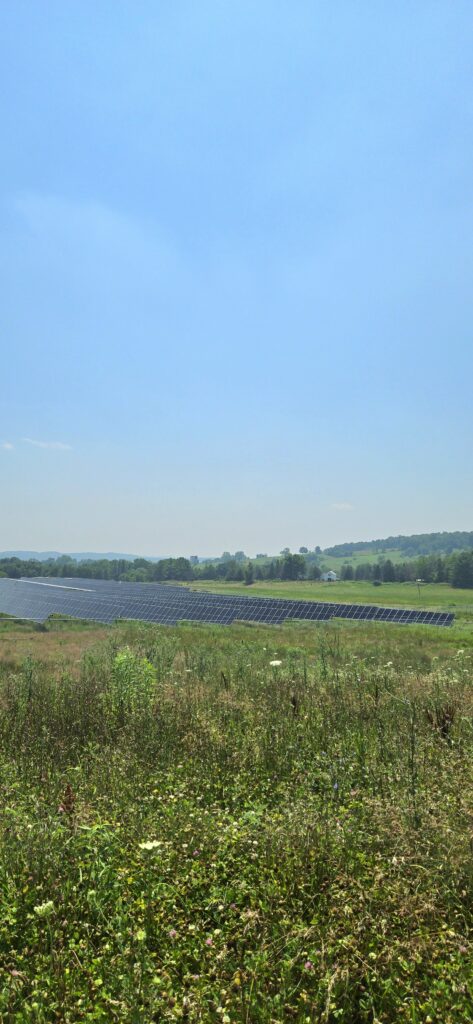
Agrivoltaics — combining agriculture and solar on the same land — is growing, partly because it addresses one of solar’s most persistent frictions: opposition from communities that fear big solar projects will eat up farmland.
Developers are pushing back with dual-use designs that allow crops between arrays, livestock beneath panels and continued lease income for farmers.
The US now has 666 agrivoltaic sites, covering over 85,000 acres and producing more than 13 GW of electricity, according to a federal map.
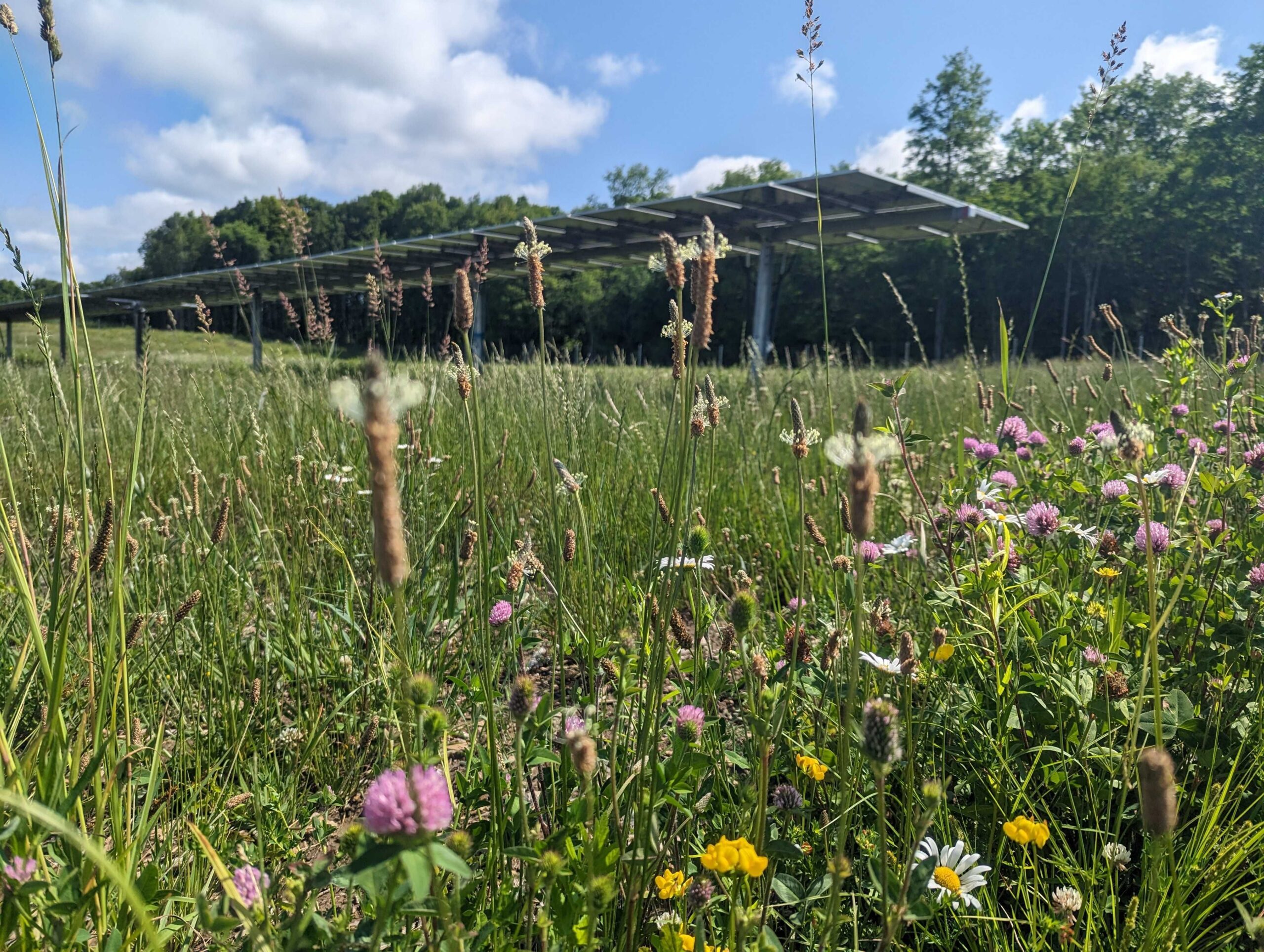
An offshoot, ecovoltaics, goes further, intentionally designing projects to improve ecosystem health through pollinator habitats, native plantings, wildlife fencing and wetland protection.
Zoë Gamble, president of CleanChoice Energy, describes ecovoltaics as a blend of energy production and ecological restoration. The approach is gaining ground as developers look for ways to reduce friction — there’s that word again — with local communities.
Karetsky is sympathetic to both sides of the farmland debate.
“I think one of the biggest tragedies is that farming is so hard that people are willing to sell their farmland to put solar on it,” he said. But he’s also clear-eyed about the economics. Solar lease payments offer stability that farming alone often can’t.
At a community solar project in upstate New York, Skyview widened the spacing between panel rows so a farmer could keep harvesting hay with a tractor.
“He still has his field and his hay, but now he’s generating a lease payment, and we’re generating electricity,” Karetsky said. “That kind of makes sense.”
What the bees are actually measuring
The bee program grew from that same instinct to make solar sites do more than one thing in what’s become known as multi-use solar.
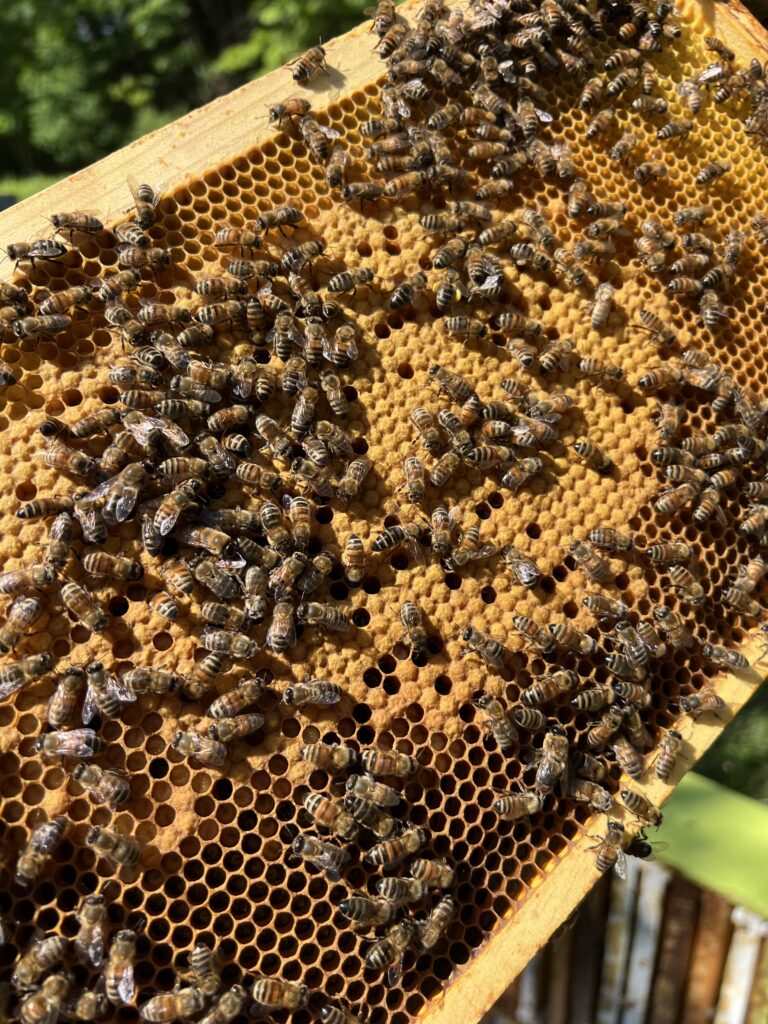
Each participating Skyview site now hosts apiaries managed by local beekeepers recruited through HiveTracks. But Karetsky is quick to say the honey is almost beside the point.
HiveTracks analyzes honey, pollen and hive activity to assess pollinator diversity, plant diversity and broader ecosystem health. The platform also supports environmental DNA testing and ecotoxicology studies. The hives, in other words, are sensors.
“What we’re really trying to do is create a baseline and an understanding of the health of the land going forward,” Karetsky said.
The program spans projects at multiple stages — pre-construction through operating facilities — so Skyview can track how biodiversity changes across the full lifecycle of a solar development. That data is already shaping operations.
Maria Morales Ferrebus, a solar development associate at Skyview Ventures, cited in the company’s announcement, noted that early results identified areas with low plant diversity that increase erosion risk and drought vulnerability — findings that are now informing maintenance practices.
Solar energy in a honey jar
Skyview’s hive projects harvested 550 pounds of honey last year and tens of thousands are expected this year. In 2025, the honey was bottled and donated to food banks or given as gifts. It’s a nice story. But in Karetsky’s telling, the honey matters most as something people can hold in their hands.
That’s the deeper point. Consumers may not track kilowatt-hours or capacity factors, but they understand farms, bees, and a jar of honey from a solar field in their county.
Near the end of our call, Karetsky and I both landed on solar calculators — that moment decades ago when solar energy suddenly felt real because you were holding it.
Agrivoltaics may be doing something similar now. Making energy tangible again. Not through specs on a data sheet, but through soil, crops and the weight of a honey jar.