
Colorado has become the latest state to embrace what’s looking like a new and disruptive technology emerging in distributed energy: plug-in balcony solar.
Governor Jared Polis this week signed HB26-1007 into law, which makes small plug-in solar systems legal, sets safety standards and opens the door to a technology that averts the need to upgrade electrical panels to accommodate the units.
The law positions Colorado among a small but growing group of states experimenting with what advocates see as a democratized form of solar energy — one aimed not at suburban homeowners with large roofs, but at renters, apartment dwellers and people traditionally shut out of rooftop solar.
Called “Improve Customer Use Distributed Energy Resources,” the Colorado law also signals that balcony solar, long common in parts of Europe, continues to gain political traction in the United States. Colorado becomes the fourth state to enact a balcony solar law, joining 35 states and Washington, DC, where such laws have captured legislative attention.
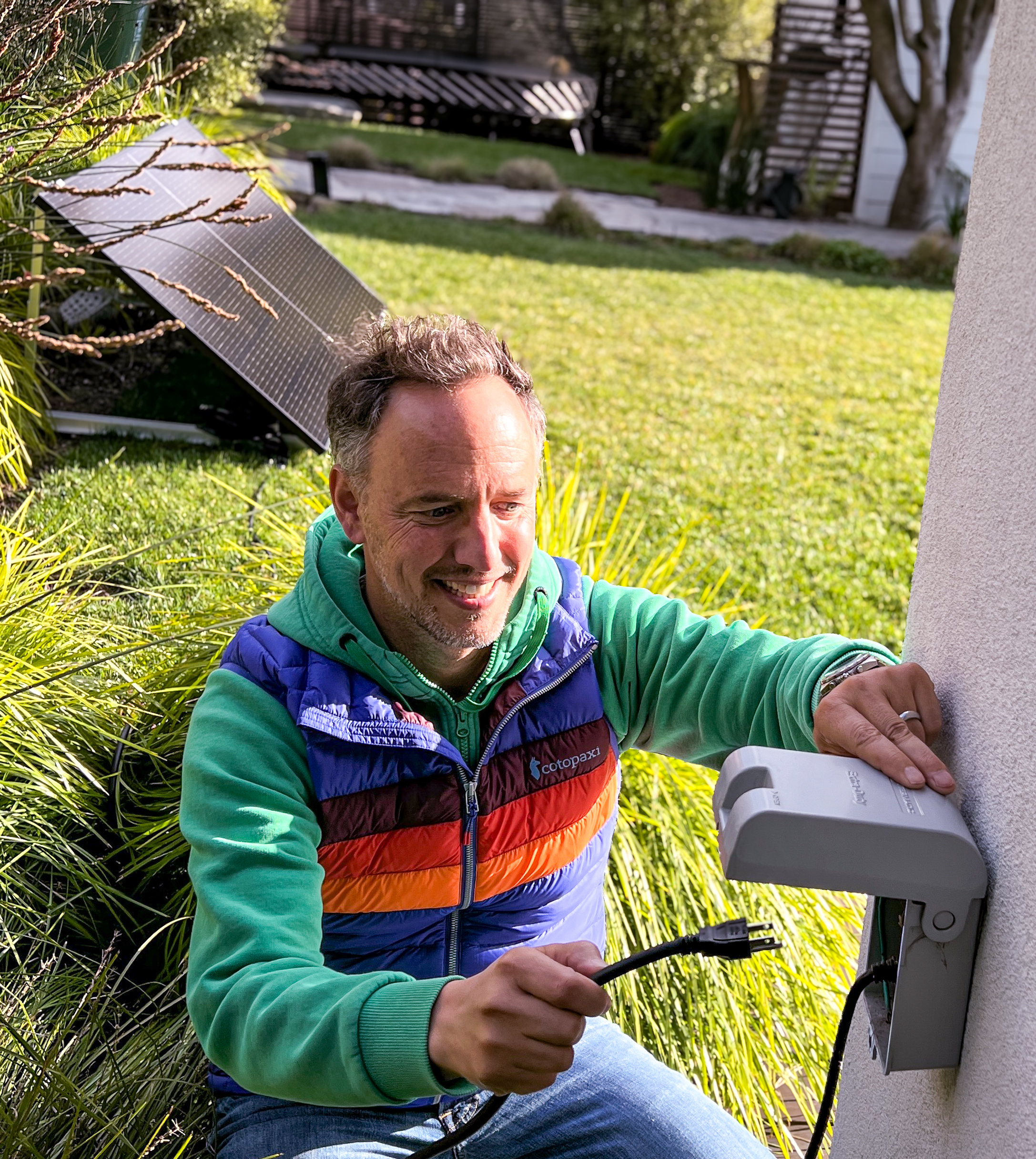
Under the new law, Colorado residents will be allowed to use plug-in solar generation devices — typically one to four panels paired with an inverter — that can be self-installed on balconies, patios or yards.
The law also bars utilities and homeowners’ associations from unreasonably blocking their use.
“This bill ensures that you now have the right to plug in an appliance and start producing your own clean energy,” said Cora Stryker, co-founder of Bright Saver, a Palo Alto, California non-profit promoting plug-in solar.
Collar meters to avert electrical panel upgrades
The legislation tackles another long-standing barrier to residential solar: costly electrical panel upgrades.
HB26-1007 requires regulators to update interconnection rules to allow broader use of meter collar adapters, which are installed between the electric meter socket and utility billing meter to simplify solar interconnection. The collar adapters can save homeowners between $2,000 and $5,000 on installation costs and help avoid potential panel upgrades that can cost as much as $10,000, according to the Colorado Solar and Storage Association.
Colorado’s law also extends the policy to municipal utilities and electric cooperatives, broadening access beyond investor-owned utility territory.
Big market potential
As Energy Changemakers previously reported, balcony solar has been spreading rapidly in Europe, particularly in Germany, where millions of residents now use small plug-in solar systems attached to apartment balconies. The units typically generate 200 to 1,200 watts, far smaller than a typical 5 to 12 kW rooftop solar system, but enough to offset some utility electrical use.
Advocates argue the model could prove even more important in the United States because roughly one-third of Americans rent their homes and therefore often lack access to traditional rooftop solar.
“Just because you live in an apartment or multi-family building doesn’t mean you shouldn’t be able to use solar panels to save money on your energy bill, and this new law expands access and choice to money-saving clean energy solutions for more Coloradans,” Polis said following the bill signing.
Unlike conventional rooftop systems, plug-in solar units typically require no major construction, no rooftop penetration and no long-term property ownership. Because they simply plug into a standard outlet, residents can take the panels with them when they relocate.
Supporters say the measure is about more than rooftop access. They argue widespread adoption of smaller solar systems could eventually help grid reliability by offsetting peak demand, particularly when paired with batteries.
Bipartisan support
The bill passed with bipartisan support, another sign that distributed energy policies centered on consumer choice and affordability may still find political common ground even as broader federal energy policy grows more polarized.
For the distributed energy industry, Colorado’s move represents something larger than a niche solar policy.
It reflects a growing shift away from thinking about solar solely as infrastructure for homeowners with large roofs and high incomes. Instead, policymakers are increasingly viewing distributed energy as a consumer appliance — portable, modular and accessible to people who have historically been excluded from the energy transition.
That may ultimately be balcony solar’s biggest disruption. Not the technology itself, but the idea behind it: that electricity generation could become as simple as plugging something in.