
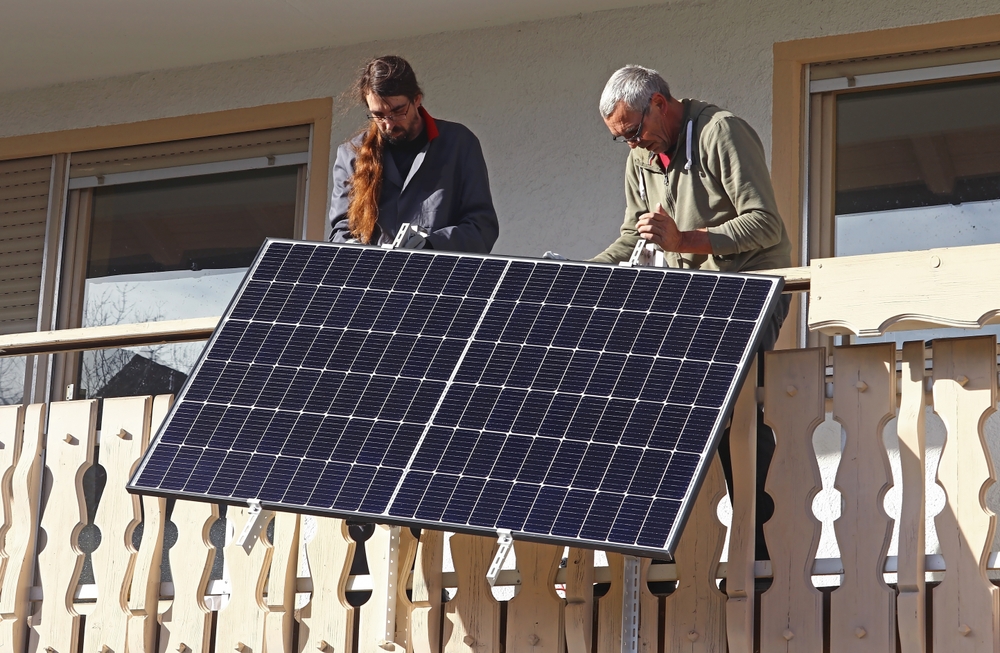
Gov. Abigail Spanberger this week made Virginia the third state to adopt a law that makes it easy for consumers to install balcony solar, also known as plug-in solar.
Virginia follows Maine and Utah.
Balcony solar systems are behind-the-meter devices that households can mount on a balcony or other structure and plug into an electrical outlet, without complying with utility interconnection or permitting requirements. They are typically 200 to 1200-watt and used to reduce electricity bills.
Virginia’s law (HB 395) prohibits any locality from banning balcony solar on residential structures as long as the units are no more than 1200 watts, comply with zoning restrictions and do not export power. The units must meet the standards of the most recent version of the National Electrical Code and be certified by a nationally recognized testing laboratory.
For more read: Don’t Underestimate Balcony Solar
The Virginia law takes effect July 1.
In early April, Maine Gov. Janet Mills signed into law a similar bill (LD 1730), which allows households to install 420-1200-watt solar and battery systems without obtaining prior utility approval, entering into an interconnection agreement, or paying any fee to the utility.
Utah last year became the first state to remove utility approvals for balcony solar (HB 340), setting into motion proposals in at least half of the states.
Balcony solar is about to break open a new front in distributed energy. Don’t miss what happens next. Get ahead of the trend — subscribe to the Energy Changemakers Newsletter—free.