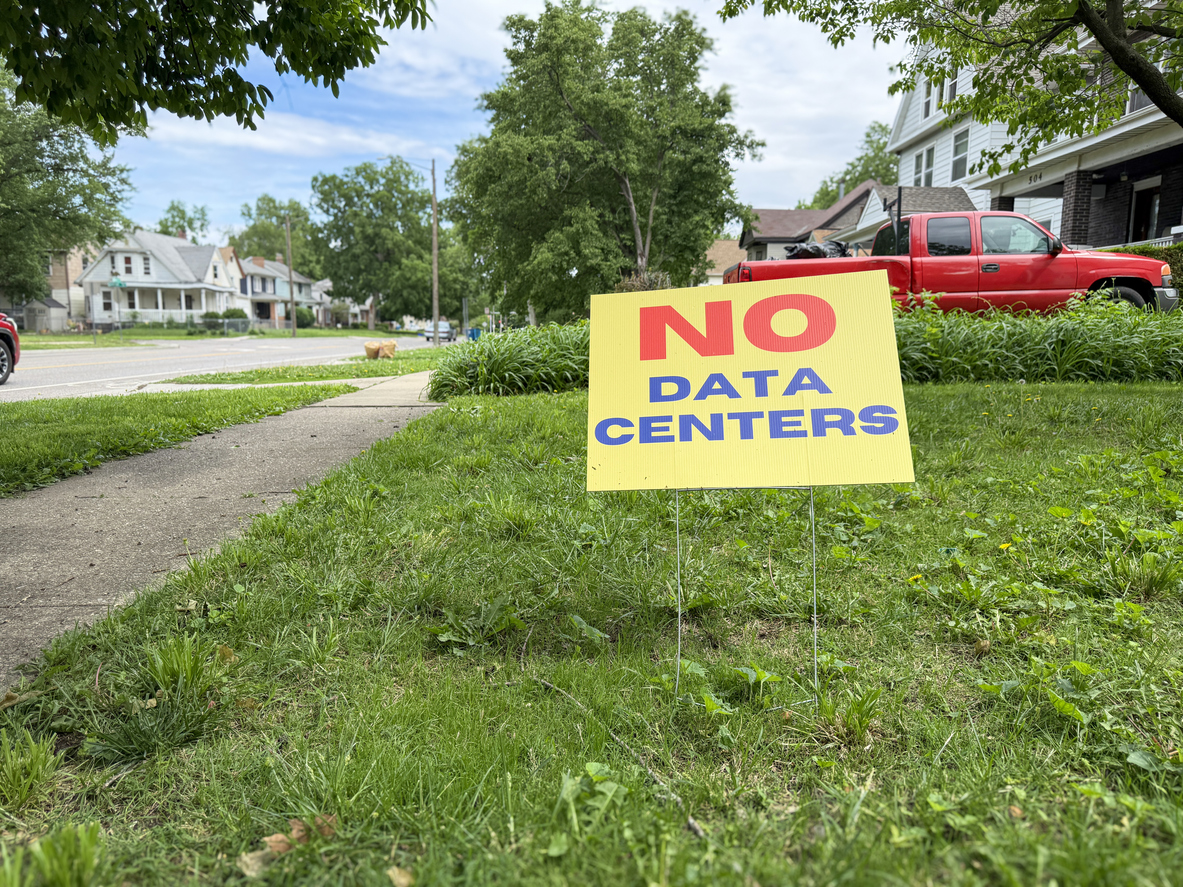
The data center industry has a big public relations problem. And according to Rich Miller, a journalist who has covered data centers since 2000, the industry has largely brought the backlash on itself.
“The history of secrecy around a lot of the data center site selection and deal making played really badly once the conversation began to be with the public instead of the officials,” Miller told Elisa Wood on the Energy Changemakers podcast.
This had a lot to do with where they focused their attention. For years, data center developers sought community access via political figures, economic development officials, and local planning boards. Developers offered local investment, jobs and tax revenue.
That worked when data centers were relatively small. But artificial intelligence and hyperscalers changed the equation.
Suddenly, developers were proposing energy-hungry gigawatt-scale facilities. Community members began to take notice and question whether the trade offs were worth the benefits. And they weren’t always satisfied with the answers.
Politicians began facing the heat
In 2023, opposition to a proposed data center near the historic Manassas National Battlefield Park helped unseat a local supervisor in Virginia who had backed the project.
“That shifted the whole narrative to where politicians could lose their jobs because they were supporting controversial data center projects,” said Miller, whose Substack is Data Center Richness.
The industry’s reliance on nondisclosure agreements added to the problem. Residents began questioning their elected officials’ priorities.
Now, opposition to data centers has become intertwined with broader public anxiety about AI’s social consequences and the tech industry’s political clout and money.
As a result, data center developers face a daunting landscape in which winning community acceptance has become as important as making inroads with public officials.
A new opportunity for local energy
But the backlash could open the door to distributed energy.
As communities resist new facilities and grid connections become harder to secure, developers are exploring ways to make data center investments benefit the people living nearby.
That includes financing rooftop solar, home batteries and other distributed resources that can increase local grid capacity.
“This is a moment of opportunity or should be a moment of opportunity for data center operators to begin to see distributed energy as part of the solution,” Miller said.
Google is among the companies pursuing that approach.
Its agreement with Voltus provides access to roughly 100 MW of virtual power plant capacity in PJM. [Editor’s note: After we recorded the show, Voltus and Google expanded the deal to 1 GW.]
Another initiative, led by Google and PG&E assembles an ecosystem of distributed energy companies to install new home energy systems and aggregate existing devices.
If this kind of model takes hold, it could change how communities perceive data centers—less as a burden and more as a benefactor.
Miller sees Google as a particularly important player because it is willing to test new arrangements that other companies may eventually adopt.
These programs remain early experiments. It’s not clear yet if they can scale and if other tech companies will be willing to try them. But Miller sees signs of progress as energy companies and data center developers come to better understand one another.
“I think that the good news is that these conversations are on the table, whether these are pilot programs or whether they’re going to lead to opening the doorways to showing what’s possible,” Miller said.
Subscribe to the Energy Changemakers Newsletter to receive our twice-monthly podcasts.