

From the outside, US electricity regulation looks like a mess.
Fifty states. Fifty different sets of rules. Different regulatory bodies, market structures, incentives and political priorities layered on top of one another. To observers in countries where a single regulator sets policy, the US system can feel chaotic—almost unworkable.
So how do you scale energy technologies in that kind of environment?
I recently spoke to Audrey Zibelman and Pat Wood III, two industry legends, who advised an 18-month effort by The Pew Charitable Trusts examining how distributed energy resources (DERs) can scale across the United States. The result is a new playbook released today, Distributed Energy Can Unleash the Resilient, Affordable Grid of the Future.
It turns out that the messiness of a 50-state DER policy yields something good: a nationwide sandbox for experimentation for rooftop solar, batteries, microgrids, virtual power plants, and other forms of local energy that can solve immediate grid problems.
A system under pressure
The push to scale DERs comes as energy demand escalates, electricity rates climb, and consumers worry that data centers will siphon off energy and jeopardize the steady flow of power that those living in the US expect.
Utilities hope to outrun the problem with more than $1 trillion in grid investment, but that will take time. Distributed energy is emerging as a quicker solution.
“The technology is there, everyone knows it works,” said Zibleman, who is the former CEO of the Australian Energy Market Operator, former chairman of the New York Public Service Commission and former CEO of PJM.
But how do we normalize it so that it becomes good utility practice?
The utility problem—and opportunity
“The utility is our enabler,” said Wood, former FERC chairman and former chairman of the Public Utility Commission of Texas.
But the enabler has little financial incentive to enable distributed energy when it can make more money building transmission lines and centralized generation.
“We have to think about the fact that utilities make a lot of money investing in capital. How can we make it that utility shareholders get just as much value out of helping customers save money?” Zibelman said.
That misalignment slows everything down.
“We’ve got to make sure that utility incentives are aligned with DER deployment,” Wood said.
Comment on this article on Energy Changemakers’ Substack
What got us here
None of this is new to Wood. As he sees it, grid decentralization is the next phase of a long-running market evolution we’ve been navigating for decades.
In his telling, the industry has already undergone one major transformation: the opening of the bulk power system that allowed large generators and wholesale marketers to compete. What’s happening now is simply finishing that job—extending the same competitive logic down to the business and household.
“The DER effort is finishing the job, taking it down all the way through the distribution grid to the customer meter,” he said.
The problem for DERs is that “the rules were written for a world that didn’t have them,” Wood said.
Pew’s playbook
That’s what Pew set out to fix when it convened a diverse group of energy experts to study what the states are doing. The results are a playbook that sets three DER goals and a series of actions for policymakers to consider.
- Integrate DERs as core grid resources into utility planning, investment, and procurement decisions.
- Require DER optimization as part of distribution grid planning
- Establish targets for virtual power plant capacity and customer participation.
- Align utilities’ financial interests with DER deployment
- Reduce administrative, technical, and regulatory barriers to allow DERs to be permitted and granted grid access faster and at lower cost.
- Automate and streamline permitting processes.
- Automate and streamline interconnection
- Strengthen community resilience by using DER solutions to improve grid reliability.
- Leverage DER capacity to reduce the frequency and duration of outages and to provide homes and communities with backup power during blackouts.
What the states are doing
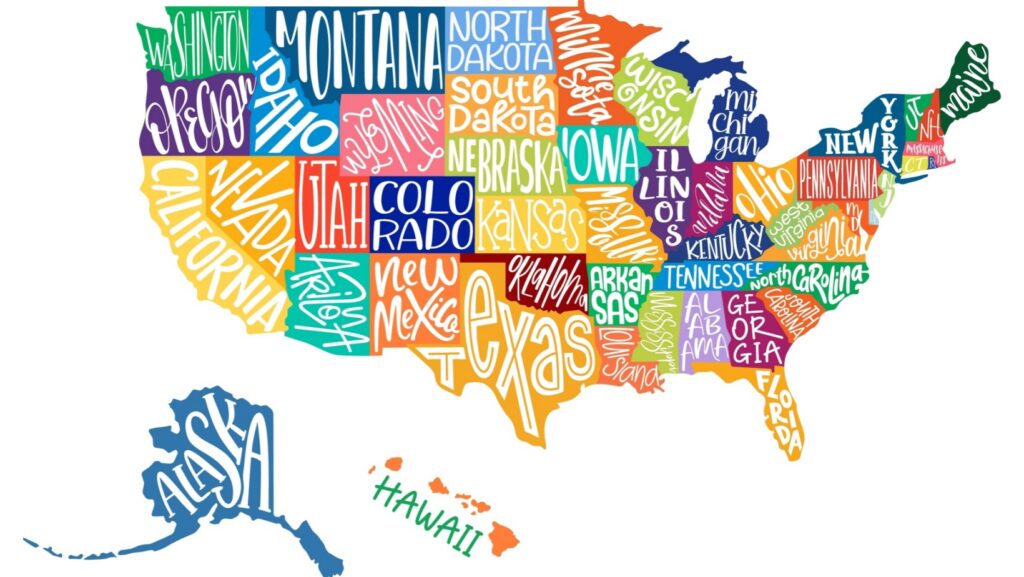
The report profiles innovations in several states for policymakers to draw from.
For example, Colorado now requires detailed distribution system plans that evaluate DERs alongside traditional investments, and it’s also incorporating virtual power plant capacity into its planning process. Illinois mandates multi-year grid plans with stakeholder input and has created a framework that pays DER owners both upfront and based on performance. Massachusetts requires utilities to map out how DERs and electrification will shape future grid needs.
States like New York are shifting utility rate-making toward performance-based outcomes. Minnesota and North Carolina are experimenting with shared savings and performance incentives tied to DER deployment.
Other states are making it easier to permit and interconnect DERs. Texas has streamlined permitting through third-party inspections. California has automated residential solar permitting. Massachusetts has consolidated approvals for larger projects. Hawaii has introduced performance incentives to speed timelines. Other regions are experimenting with flexible interconnection, allowing projects to connect faster with operational limits.
States are also using DERs to address reliability head-on.
Puerto Rico has built a virtual power plant from distributed batteries that can respond to grid emergencies. Louisiana is deploying community resilience hubs powered by DERs. North Carolina is investing in microgrids following severe storms.
“What we want to do is make sure that everyone doesn’t feel they have to reinvent the wheel. But can we get to a common approach, picking up on some of the themes we’re seeing, and make it then easier for states to adopt it — but more importantly for technologists to be able to deliver solutions,” Zibelman said.
Time to get going
Taken together, these examples reveal something important.
The U.S. system may be fragmented—but it is also dynamic.
Now, Wood said, it’s time to accelerate the copying process, take the best practices, “and get going.”
Much of this copying relies on regulators and policymakers to act. That means shaking off political strife. “Electrons don’t vote. They’re not red or blue. And they work the same everywhere,” Zibelman said.
Pew’s playbook takes a realistic approach. It doesn’t invent something new but attempts to reduce uncertainty, cut through fragmentation, and make it easier to act in a system that will likely remain messy by design.