

Utility corruption costs ratepayers money, but its damage may run even deeper, undercutting energy innovation and prosumerism, says Dick Munson, environmental activist and author.
In a new Energy Changemakers Podcast, Munson details instances of bribery, dark money and regulatory capture that have rocked the utility world in recent years. Drawing from his recent book Power Corrupts: Cleaning Up America’s Biggest Industry, he talks about:
- The recent two-year prison sentence for Anne Pramaggiore, the former CEO of Commonwealth Edison, who was accused of channeling $1.3 million in utility funds to political figures in exchange for favorable legislation.
- FirstEnergy’s high-profile bribery scheme in Ohio, described by the Associated Press as the largest infrastructure scam in U.S. history due to its $2 billion cost to consumers.
Utilities are particularly vulnerable to corruption in Munson’s view because they are monopolies shielded from most competition. This can leave them with little incentive to innovate and a portfolio of outdated and uneconomic coal and nuclear assets that need financial support.
Follow the Energy Changemakers Podcast on Apple or Spotify.
New technologies, such as distributed energy, microgrids and distributed automation, put further pressure on utilities because they erode their sales by offering consumers an alternative to utility power.
“All of those can threaten the conventional utility business model and empower prosumers,” he says. “I think it scares the dickens out of them.”
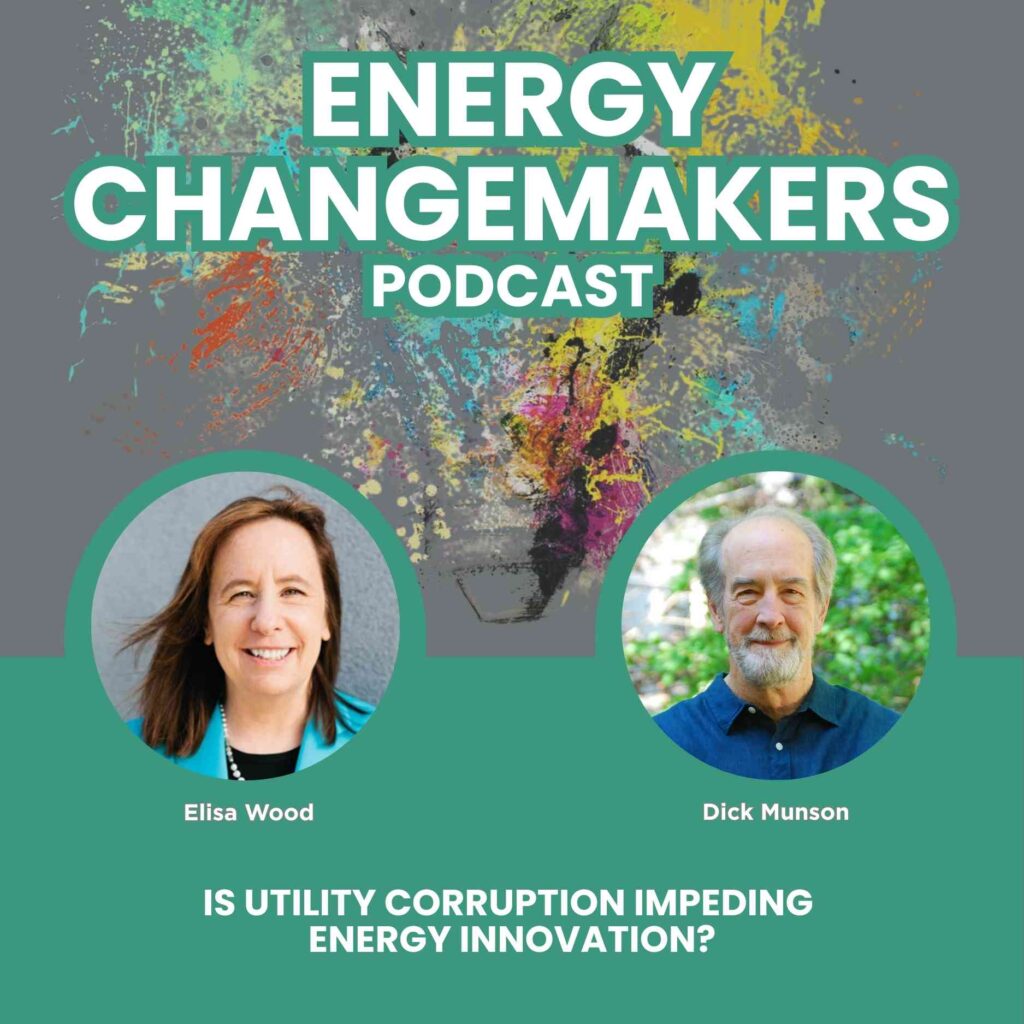
How utility corruption impedes energy innovation
Because of this fear, some utilities put up roadblocks to new, competing technologies and double down on preserving their large, centralized generators. “They continue to milk that resource,” Munson says.
Given that utilities are highly regulated monopolies, it is not the market that they must influence to earn a return on investment, but rather lawmakers and regulators. And to achieve that influence, some step over the line and resort to bribery.
Munson points to Ohio’s First Energy scandal as a good example. The utility’s problems began when its leadership made the mistake of focusing on coal-fired generation just as fracking was making natural gas cheaper. Furthermore, the company doubled down on nuclear energy despite its rising costs.
In January, a federal grand jury indicted two FirstEnergy executives on racketeering charges for channeling $60 million to a legislative leader in exchange for a $1.3 billion utility bailout. A range of state and SEC indictments preceded this.
“The use of corruption to be able to get bailouts and subsidies is raising electricity rates. It’s raising taxes. And it’s imposing a drag on modernization,” Munson says.
Munson calls for changes in law to curb monopoly abuse, including stricter campaign finance laws. Munson also sees a need to rethink the concept of utility monopolies.
“We need to check the monopolies, reduce them rather than increase them as they seek to be the only ones that advance high-power transmission lines or the only ones that are allowed to power data centers,” he says.
Munson hopes his book will make clear the connection between utility corruption and delayed innovation.
“Clean energy advocates, myself included, have not realized the extent of corruption — and the ability to oppose it as a means to advance innovation in this important sector,” he says. “Efforts to link clean energy and clean government could be a powerful tool for trying to advance policies that encourage market forces to allow these innovations to arrive and thrive.”
Listen to the podcast, Is Utility Corruption Impeding Energy Innovation.