
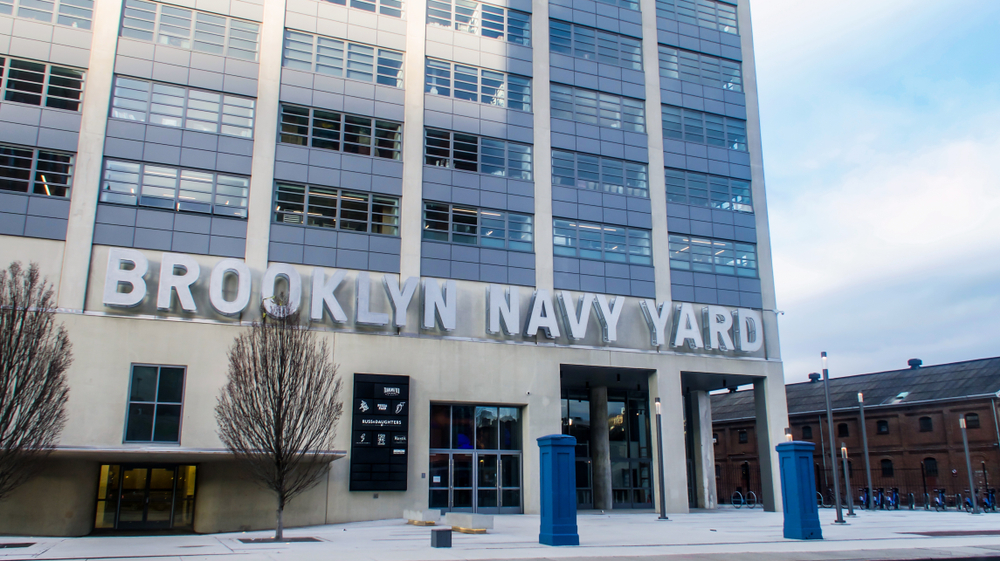
The Brooklyn Navy Yard in New York issued a request for proposals for EV charging on June 4. To learn more about what the Navy Yard seeks and its long-term plans, we conducted a Q&A via email with Andrew Tran, the Navy Yard’s director of development.
Is the EV infrastructure self-contained, or is it part of a larger energy plan for the Navy Yard? If so, what does that energy plan entail?
The Brooklyn Navy Yard is a 300-acre industrial campus that supports 550 businesses and 13,000 employees — making comprehensive, sustainable transportation planning essential. The Brooklyn Navy Yard Development Corporation (BNYDC) has taken a holistic approach to mobility, including a campus shuttle, CitiBike partnership, and ample bike infrastructure.
With this RFP, we are working to expand electric vehicle infrastructure on the campus — aligning directly with our transportation planning and our broader energy goals to promote EV adoption and meet the growing demand for EV charging. By seeking an EV charging operator, we will be able to lease up to 20 spaces for tenant use and up to 10 additional spaces for public use, providing a direct benefit for both Yard employees and the neighborhood.
With a diverse transportation network and a strong climate-focused community, the Yard is well-positioned to advance EV adoption and contribute to the city’s green economy. By leveraging city-owned land for clean transportation, the BNYDC is deepening its commitment to renewable energy and reinforcing its role as a sustainability leader.
Subscribe to the free Energy Changemakers Newsletter
Why did you decide to lease out the spaces as opposed to a different business model?
Leasing commercial space is at the core of BNYDC’s business model. It’s a structure we understand well and one that has enabled us to successfully support a wide range of tenants with diverse business models. Given that EV charging is still an emerging industry, we believe leasing offers operators the flexibility to innovate and grow without being constrained by an overly complex or prescriptive arrangement.
Will the bid winner have the opportunity to leverage the EV chargers in a virtual power plant?
Yes. BNYDC has seen early interest from EV charging operators who are also active in decentralized energy and battery storage. We welcome proposals that incorporate innovative uses of the charging infrastructure, including participation in virtual power plants and other advanced energy solutions.
Where will the chargers draw their power from?
The EV chargers will draw power from substations managed by BNYDC, which receives electricity from Con Edison and Brooklyn Navy Yard Cogeneration Partners LP (“Cogen”), depending on the area of the Yard.
The selected charging operator will be permitted to draw power from these existing BNYDC-managed substations, eliminating the need to request new electric service. Each substation can support a demand of at least 1 MW, and all power used for charging will be sub-metered and billed back to the operator. This approach reduces infrastructure barriers and accelerates the deployment of EV charging on campus.
Why were 20 spaces identified? Is this based on current needs for EV chargers at the facility?
Our team has identified 20 spaces to meet our campus demand, as even with access to public transportation and our shuttle, a significant portion of the Yard community commutes by car and several businesses operate commercial fleets. On an average weekday, approximately 1,500 cars enter the Yard, with an estimated 3% being EVs or plug-in hybrids. In addition, several tenant businesses have expressed interest in expanding EV charging infrastructure to support the transition of their fleet vehicles to electric. At BNYDC, we are always looking to grow how we meet the needs of our community, and we are continuously assessing all of our initiatives. We are looking to add 20 spaces on our campus with this RFP, but we will not stop assessing need once these are in place. The Brooklyn Navy Yard evolves with our tenants – and this project is no exception.
Interested respondents are invited to submit their RFP no later than Tuesday, August 14, 2025. Respondents are required to submit an overview of its organization and proposed implementation to this RFP. Submit proposals to Andrew Tran (BNYDC_Charge@bnydc.org). For more information about the Brooklyn Navy Yard and to access the full RFP, please visit BrooklynNavyYard.org.