So far, the distributed energy industry hasn’t paid much attention to the 46 million households that are renters.
Property rights issues, landlord disinterest, customer acquisition costs and tenant turnover have conspired to make it tough to justify tailoring products to apartment dwellers and renters.
But that’s starting to change with New York City — and its 2.3 million renter households — as a focal point.
Support Energy Changemakers with a free or paid subscription
Jackery and Brooklyn-based Every Electric have big plans for the city, supplying renters with free plug-in batteries that arrive ready for virtual power plant use. Renters and apartment dwellers earn money for allowing the local utility to use the battery (tied to their air conditioning) when it needs extra energy.
The partners tested their idea through a Con Edison demand response program that aggregated 2,000 batteries across more than 1,000 renter households, representing 4 MWh of distributed storage. Every Electric says it now has a waiting list of 15,000 air conditioners in rental homes.
A virtual power plant that plugs into the wall
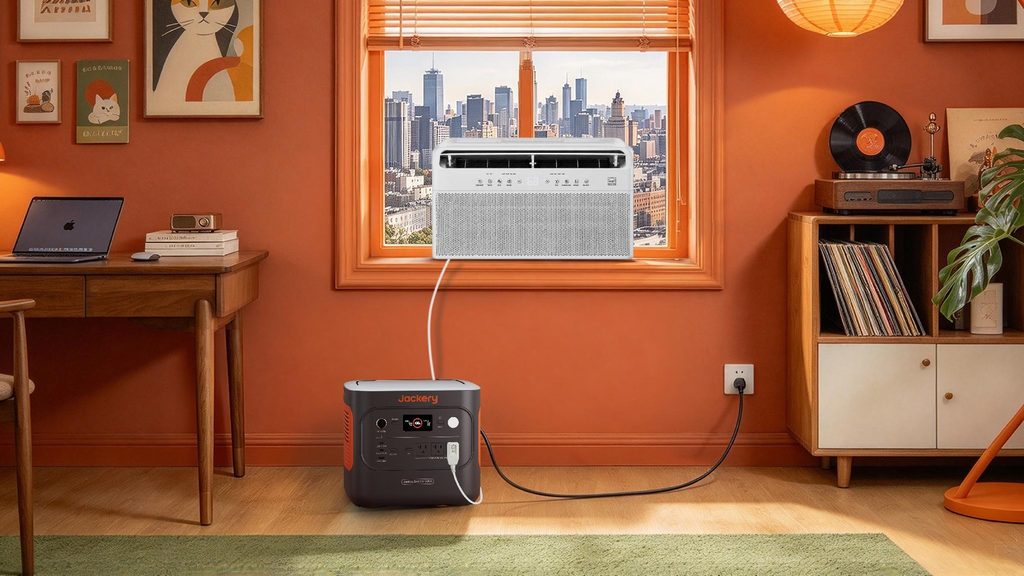
Like plug-in solar, the batteries can be installed without an electrician or special permits. For the renter, it’s as simple as plugging the portable battery into a standard wall outlet, then plugging a window or portable air conditioner into the battery.
The batteries come with pre-installed virtual power plant software that residents connect to their home wifi.
When the grid is under strain, the battery powers the air conditioner so that it doesn’t have to draw electricity from the utility. Every Electric’s software coordinates charging and discharging across a fleet of households. Renters don’t lose their AC, a criticism of earlier demand response programs.
Batteries are free for participants, but a refundable deposit is required. Individual apartment dwellers can participate; the program doesn’t require buy-in from the entire building.
The program generates revenue for providing the grid service, with proceeds shared among the renters, Every Electric and Jackery.
Seasonal payouts to participating households are approaching $200,000, according to the companies, which say some households have earned enough to offset a month’s summer electricity costs.
Renters become energy players
Jackery and Every Electric aren’t alone in recognizing the value of the rental market.
Fieldston Power is turning New York City apartment rooftops into community solar projects, beginning with 73 rent-regulated buildings totaling 3.3 MW.
Its business model removes the burden of solar development from landlords while providing discounted electricity to subscribers, including low-income households.
New York City is becoming fertile ground for distributed energy
New York City’s government seems to be increasingly inclined toward distributed energy solutions.
In July report, Comptroller Mark Levine recommended that the city adopt a strategy in which city-owned property doubles as an energy asset capable of generating electricity, storing energy, supporting electric vehicle charging, participating in energy markets, and strengthening neighborhood resilience.
The plan goes beyond just creating more distributed energy to designing a coordinated portfolio of energy assets, which Levine says are apt to attract long-term institutional investors and lower financing and procurement costs. The plan also could reduce consumer exposure to volatile natural gas prices, the report say
Beyond New York City?
But Beau Tyrrel, product manager at Jackery, said he sees potential to expand the model to other utilities and markets. Renters are everywhere, and there is no shortage of high electricity bills to offset.
“I think with the proof case in place, we’ll be able to expand, showing other utility companies, this is what we’ve done, it’s working,” he said.