
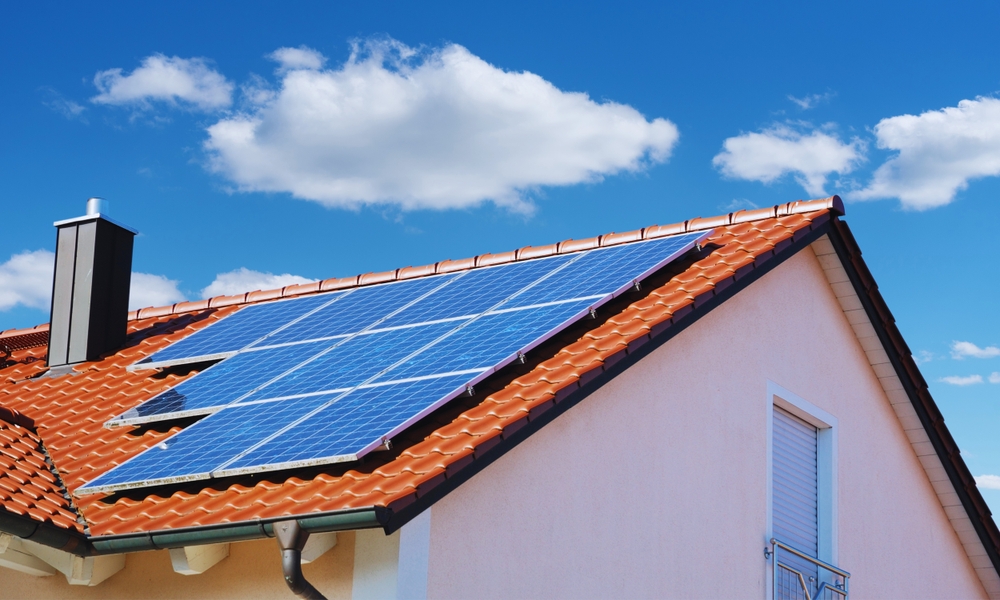
Distributed technology turned the home into a power plant. Now it’s turning the home into a green data center, too.
Sunrun, the distributed solar giant, is piloting a model that places AI compute nodes in homes equipped with its solar and battery systems. The company would aggregate and sell the computing capacity, much as it does energy — but to enterprise buyers rather than the grid. Homeowners get paid for hosting.
This is more than a clever idea. It speaks to bigger trends in democratizing tech wealth through the home.
What is democratized compute?
Like distributed energy, distributed edge data centers put computing power in the hands of the many rather than a few. In this case, households share in the wealth of the AI boom through compensation for hosting the node. The model can also improve the economics of the home’s solar and storage system.
Second, the Sunrun model addresses a problem dogging the tech industry: community opposition. Residents fight large data centers, often viewing them as a drain on energy resources. Small nodes in homes flip that equation, sending revenue directly to homeowners.
Third, the model offers speed-to-power. Interconnecting a data center to the grid can take years. Sunrun says its model can add significant inference capacity in a fraction of that time by powering the systems with home solar and storage.
Sunrun also builds in resilience. Because the compute nodes pair with Sunrun’s onsite batteries, data processing continues even during a power outage.
And there is an efficiency play too. Sunrun optimizes the nodes in concert with each customer’s energy consumption patterns, grid services participation and electricity rate structure.
Sunrun sees distributed edge computing as a new business category — a high-margin revenue opportunity that leverages its existing energy infrastructure, 1.1 million customers and grid service capabilities.
The company launched the pilot after a proof of concept that it says demonstrated revenue generation and strong demand for distributed compute. The timing tracks with the market. AI inference demand is growing 35% annually, and McKinsey forecasts it will surpass training as the dominant AI workload by 2030, accounting for more than half of all AI compute.
Next stage data centers suit home
Inference suits the home in a way training does not. Training requires massive, tightly synchronized clusters. Inference is modular, geographically distributable, and sensitive to latency — a natural fit for edge deployment close to end users.
The compute pilot is separate from Sunrun’s recently announced agreement with Renew Home and Tesla to aggregate more than 16 GW of flexible home energy capacity for hyperscalers and utilities. But the two complement each other. Compute deployed in customer homes serves the same surging AI demand that is driving hyperscalers to seek every available path to new energy capacity.
Sunrun will decide the scale, speed, and shape of a broader rollout as it completes the pilot in the coming months. The company is in discussions with enterprise compute offtakers, homebuilders, and utility partners to determine the rollout plan.
Sunrun’s customers can join a waitlist to participate.